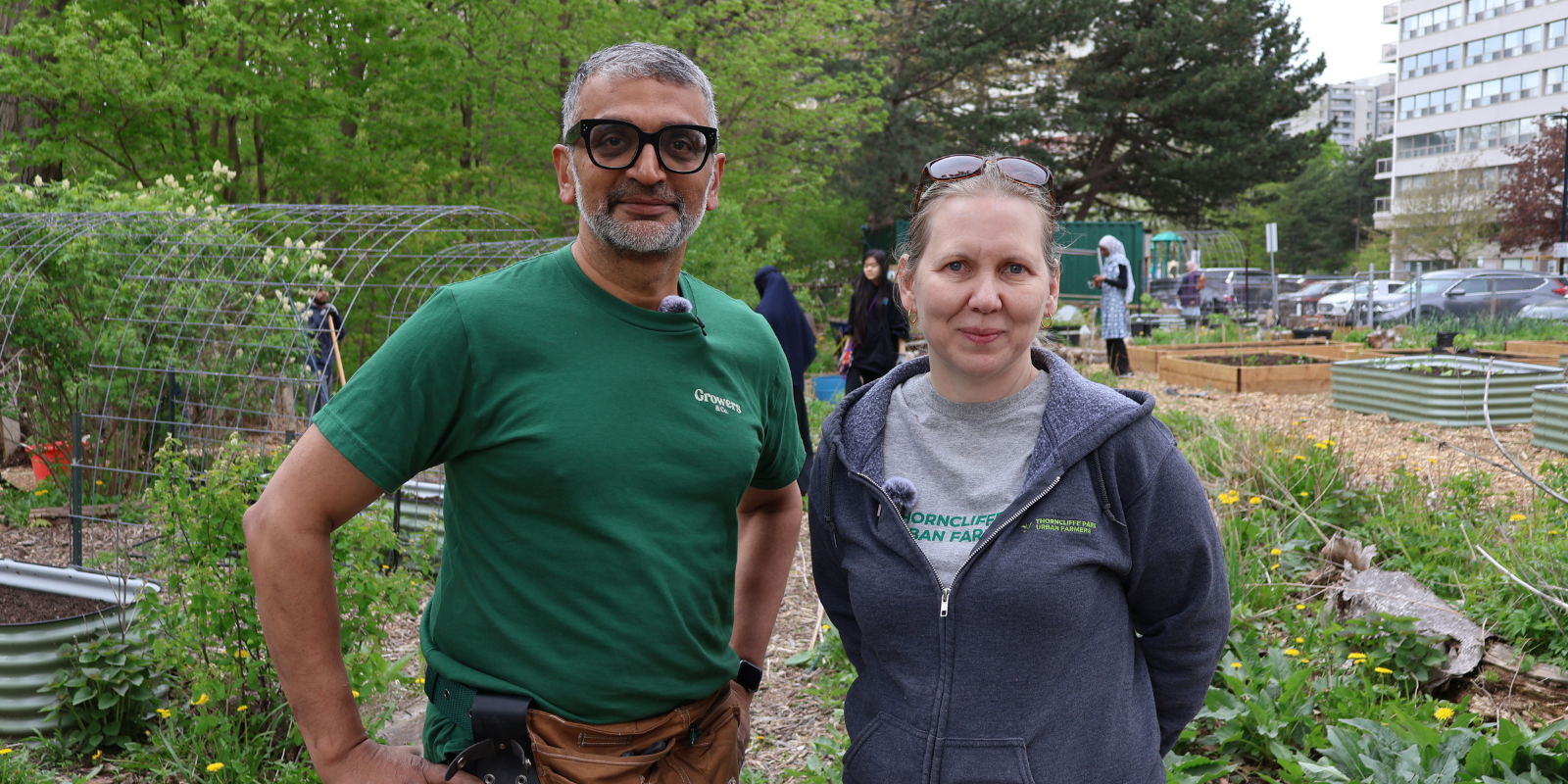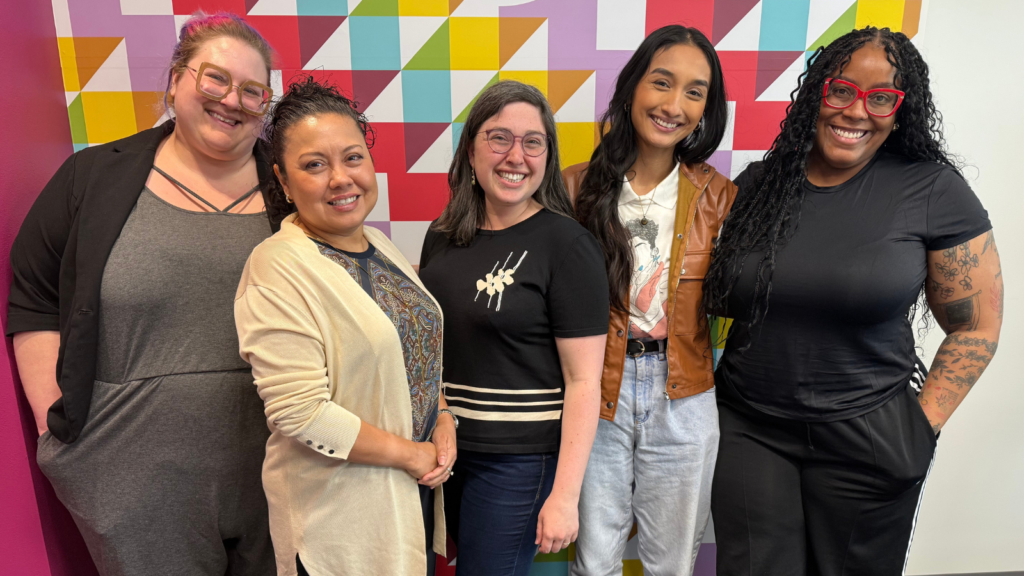
From left to right: Kelly McAllister (Friends of Ruby), Harmy Mendoza (WomanACT), Miriam Selick (Canvas Programs), Sariena Luy (Flaunt-it Movement) and Monica Samuel (Black Women in Motion)
Put a group of nonprofits in a room and ask them to divide funding among themselves, and you can almost feel the discomfort before the conversation begins.
Scarcity does that.
Most charitable organizations operate in a system where resources are tight and survival is never fully guaranteed. A system where even organizations working toward similar goals can end up competing against one another.
But what happens when the structure changes?
The shared granting model invites this shift. In this approach, funders convene a group of grantees and invite them to distribute a pool of resources among themselves. As a form of participatory grantmaking, it redistributes decision-making power and enhances equitable access to funding.
Why it matters
Shared granting encourages both funders and community organizations to rethink their traditional roles:
- Funders cede decision-making power to the communities closest to the work, supporting self‑determination and trust.
- Community organizations consider not only what they need, but what they can contribute to the broader ecosystem—moving beyond a transactional, monetary lens.
In 2025, we completed our second sharing circle building on a pilot launched in 2022. This time we partnered with Canadian Women's Foundation to engage organizations supporting young women, girls and gender-diverse people. Through both sharing circles, grantees were invited to collectively allocate funding amongst themselves.
In 2025, this amounted to $365,000. The learnings below draw on insights from both iterations of this approach.
“We were drawn to the shared granting circle model because it aligns strongly with our feminist grantmaking approach. Feminist philanthropy asks us to think not only about who receives funding, but about who holds power in funding decisions, whose knowledge is valued, and how relationships and accountability are built throughout the process. Shared decision-making creates space for lived experience, community wisdom, and collective reflection to meaningfully shape where resources flow.”
- Keetha Mercer, Canadian Women’s Foundation
How the process unfolded
At the beginning, participants were guaranteed a portion of funding, along with access to an additional shared pool that could be distributed among the group. Organizations could keep their share, gift portions of it to others or do a combination of both.
The structure mattered. In a sector shaped by scarcity, guaranteeing a baseline of support helped ease some of the anxiety that naturally comes with conversations about money.
Still, there was hesitation in the room at first.
Participants began by sharing more about their organizations: the communities they serve, the pressures they face and the work they hope to grow. As the conversation unfolded, common threads started to emerge. Organizations that might otherwise see each other only through funding streams or partnerships began recognizing shared challenges and overlapping goals.
From there, the dynamic shifted.
After hearing from one another, participants revisited how they wanted to distribute funding across the group. Some chose to direct more resources toward organizations with fewer opportunities for partnership or visibility. Others were motivated by projects they felt could create broader benefits for the sector as a whole.
What emerged wasn’t consensus for the sake of consensus. Participants made different decisions for different reasons. But throughout the process, there was a noticeable spirit of reciprocity: take what you need, leave some for others.
The final conversations moved beyond money altogether. Participants discussed what non-financial resources they could offer each other and where they needed support themselves.
What was shared ranged from practical tools to hard-earned experience:
- volunteer program templates
- shared operating space
- mentorship and training opportunities
- guidance on working with newcomer communities
- advice on becoming a registered charity from someone who had recently gone through the process themselves
By the end of the circle, organizations weren’t only talking about funding. They were talking about how to stay connected to one another beyond the process itself.
“…[This] granting circle was one of the most thoughtful and human-centered funding experiences I’ve participated in… grantmaking can be a space of care, solidarity, and learning — not just administration.”
- Grantee who participated in shared granting circle
Takeaways for funders
Facilitating a successful grant-sharing circle requires self‑awareness and intention. Addressing the scarcity‑abundance dynamic between funders and those seeking funding means investing in relationship‑building and thoughtful program design. From our experience, we recommend:
- Inclusion from the start. Co‑design with community leaders whenever possible.
- Collective wisdom as the decision-making engine. Value the insights that come from lived experience.
- Space for dialogue. Build in time to reflect, ask questions and sit with uncertainty.
- Do your homework. Only request information that cannot be found elsewhere.
- Awareness of money and power dynamics. Recognize the emotions that money brings up and the responsibility that comes with holding financial power.
“One important learning for funders is that participatory or shared models still require intentional design, care, and transparency. Open calls and traditional competitive processes are not automatically more equitable or accessible, particularly in contexts where demand dramatically exceeds available funding. Thoughtful, relationship-based approaches can sometimes create more meaningful participation, reduce administrative burden, and support stronger long-term sector relationships.”
- Keetha Mercer, Canadian Women’s Foundation
This approach doesn’t have to be all or nothing. If a funder isn’t ready for a full shared‑granting model, they can still apply elements that improve equity and accessibility. Before piloting our first sharing circle at Toronto Foundation, we ensured community leaders were part of our grant selection committees and surveyed grantees to adapt our application and reporting processes to be less onerous and more equitable.
What emerged
What stayed with us wasn’t only how the money moved.
It was how quickly relationships began to form once scarcity stopped driving the conversation.
People shared advice. Operating space. Introductions. Experience.
By the end, organizations weren’t only discussing funding decisions. They were imagining future collaborations.
That kind of trust is infrastructure too.