

Torontonians continue to put considerable trust in the people around them—including people from different backgrounds. There is an economic divide, however: people who are financially secure are much more trusting than those struggling to make ends meet. This trust gap has widened over time.

Trust first declines then holds steady
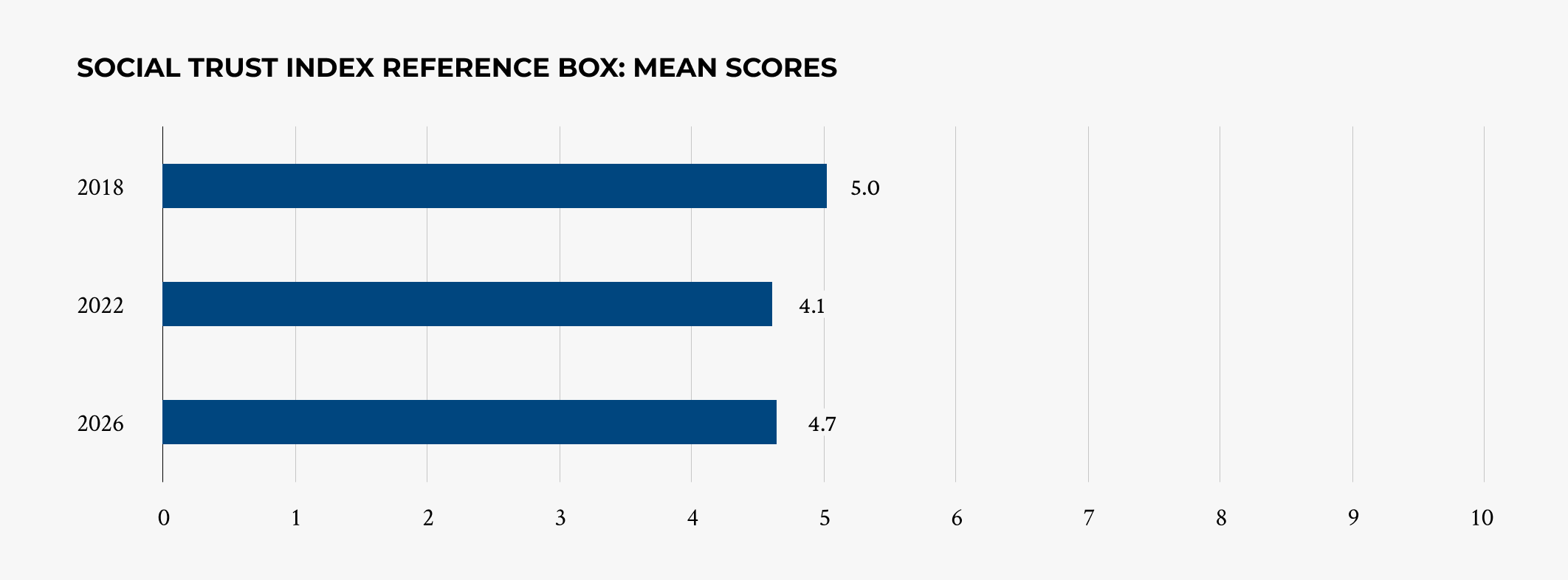
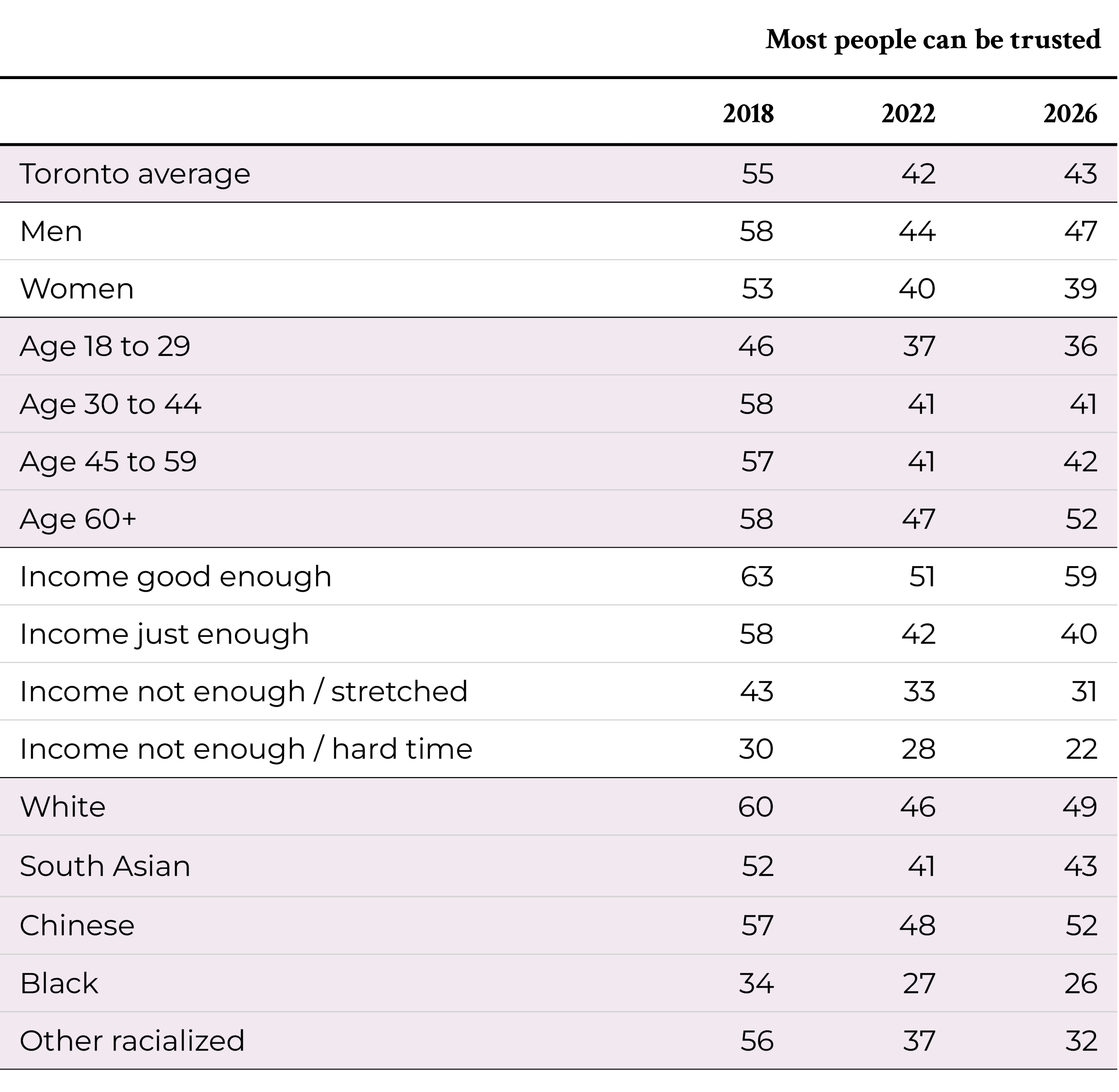
- Overall, the extent of social trust in Toronto declined between 2018 and 2022, but held stable between 2022 and 2026.
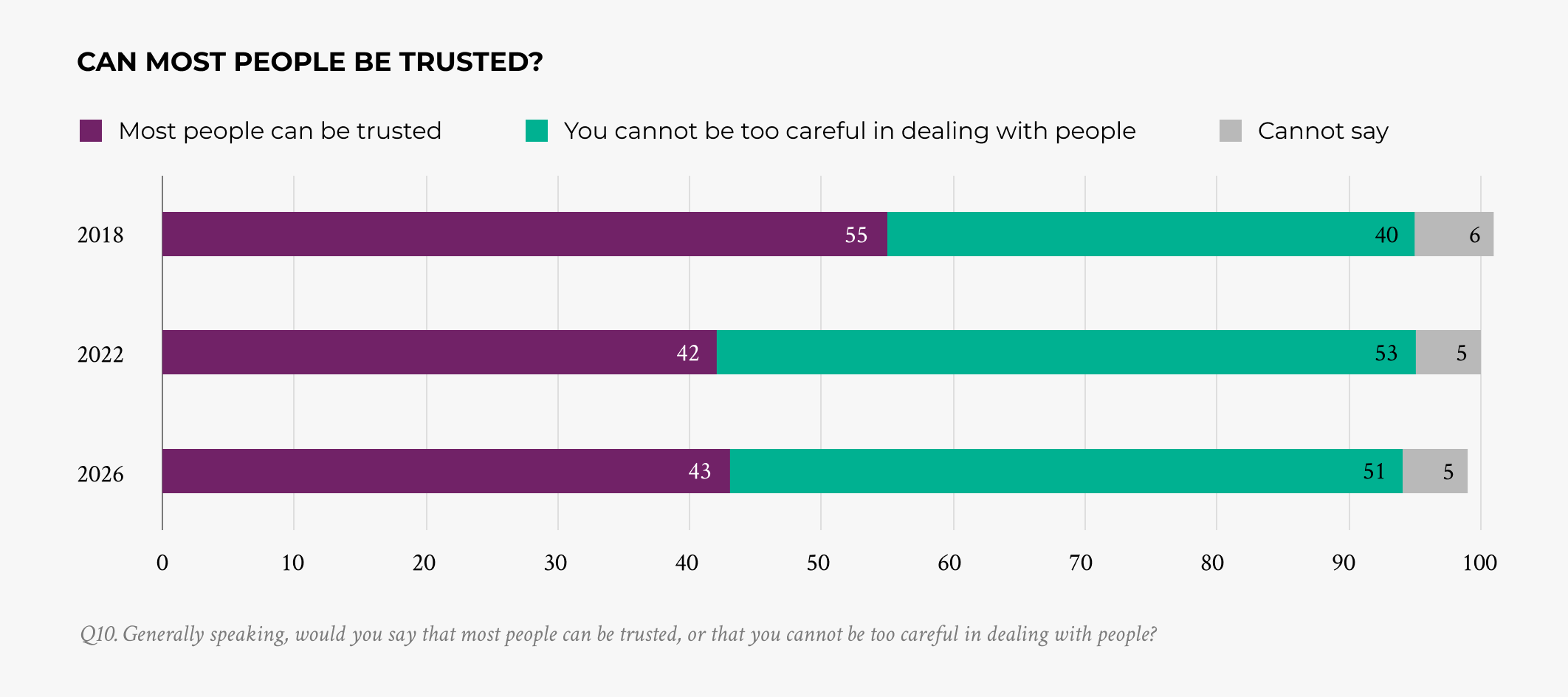
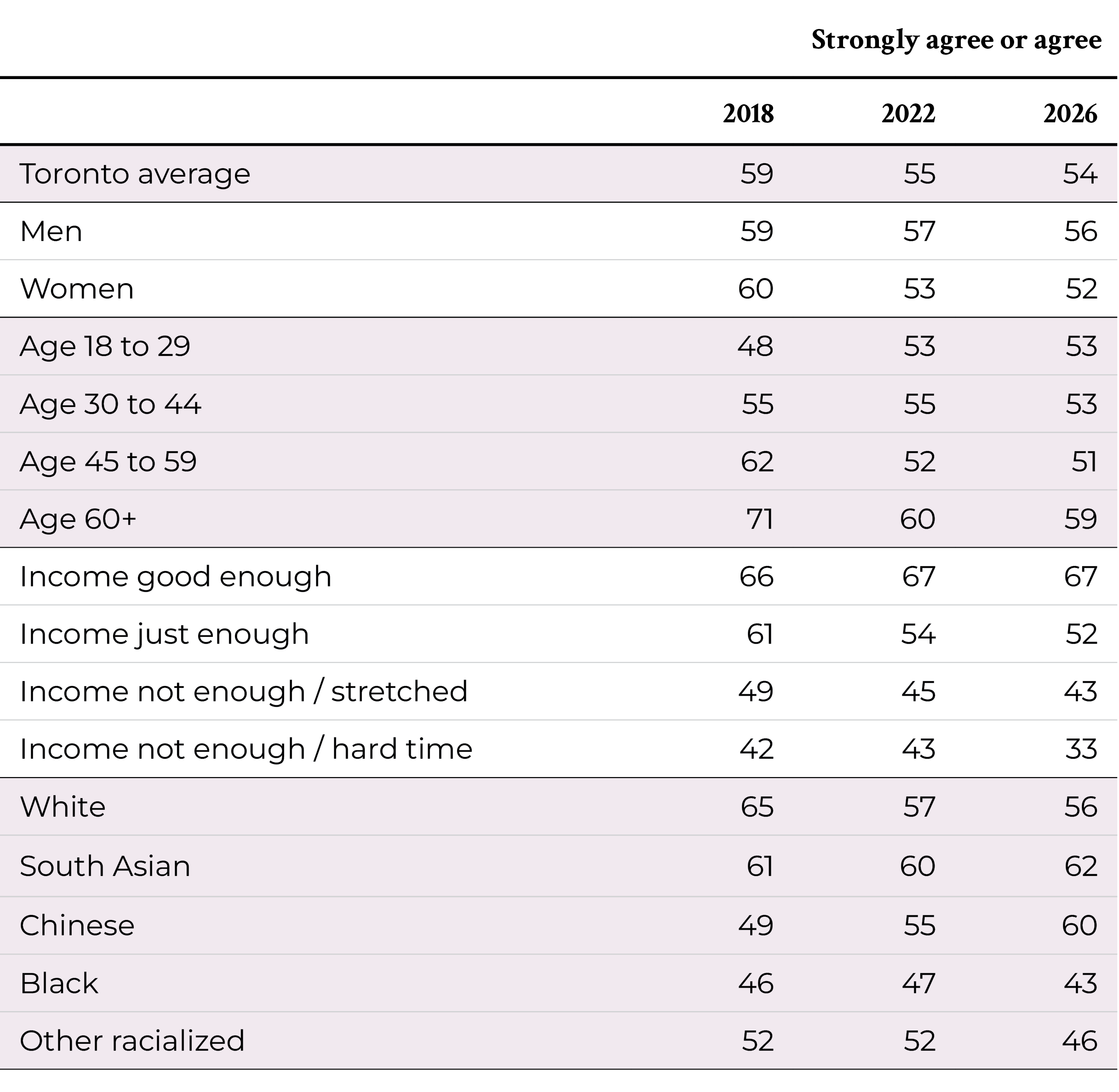
- In 2026, two in five Toronto residents (43%) agree that “overall, most people can be trusted” – essentially unchanged from 2022. A somewhat higher proportion (51%) agrees instead that “you cannot be too careful in dealing with people” (the remaining 5% choose neither statement).
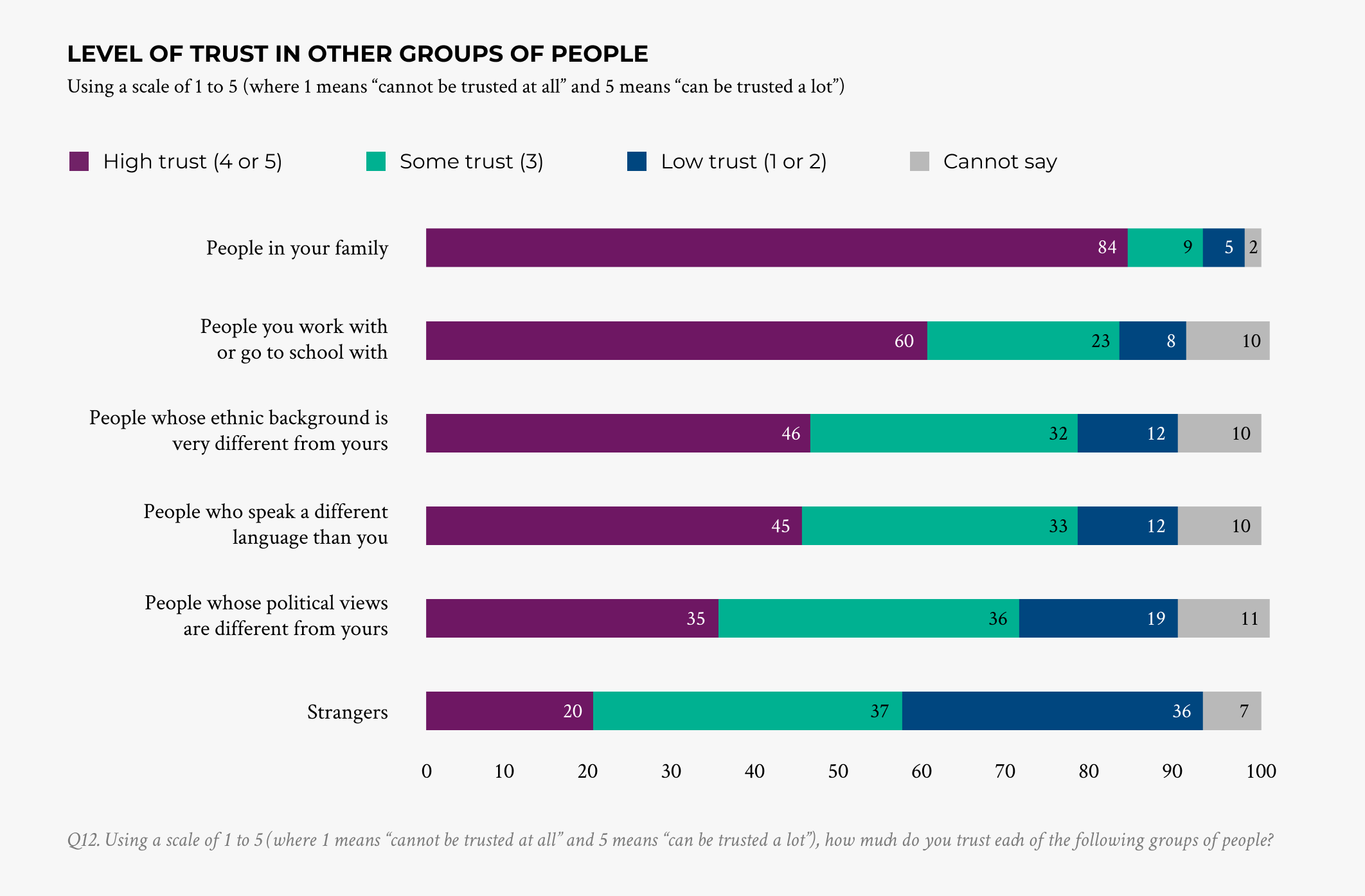
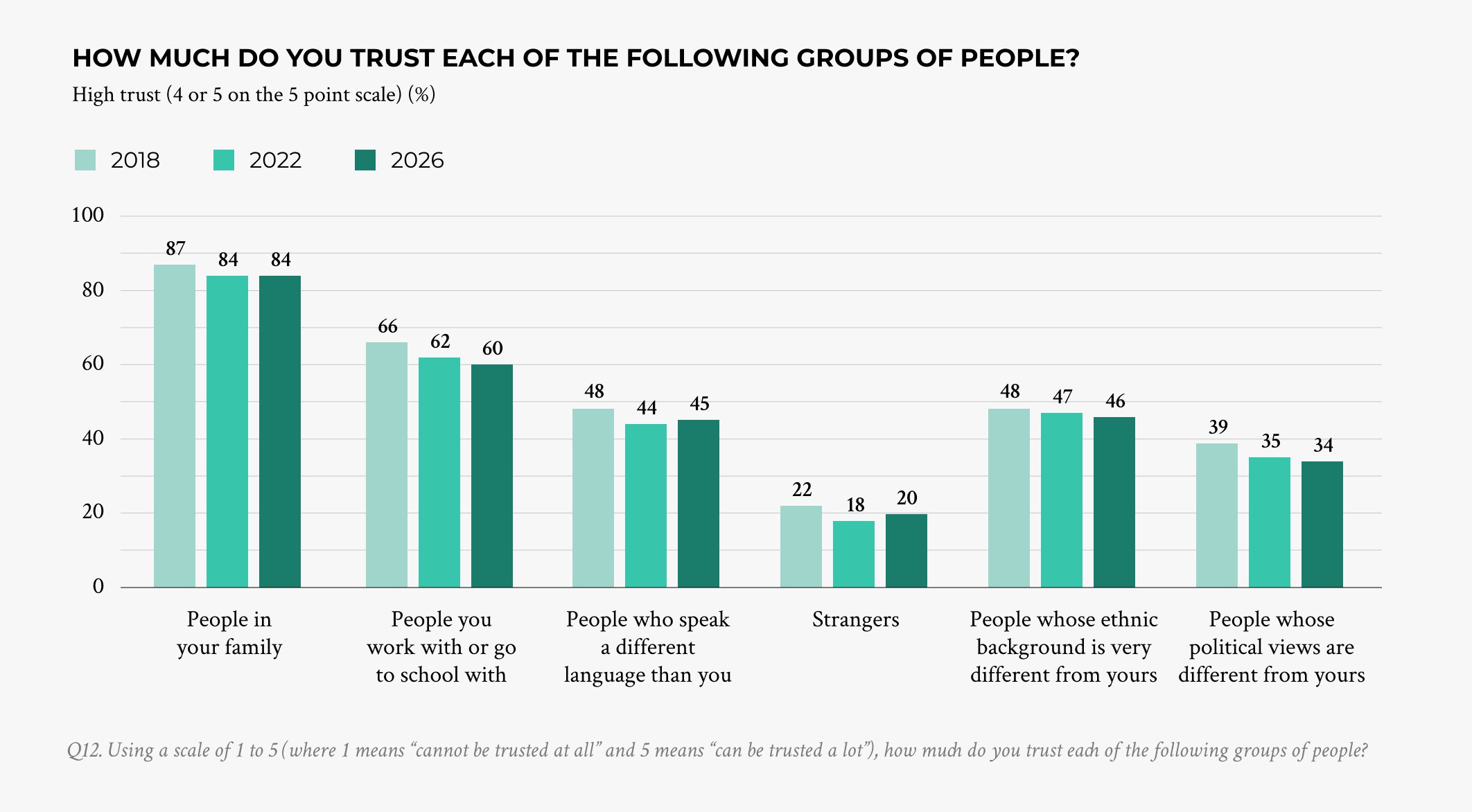
Trust in people with different ethnic backgrounds and languages has held relatively stable. And most Torontonians continue to have at least some trust in people whose political views differ from their own.
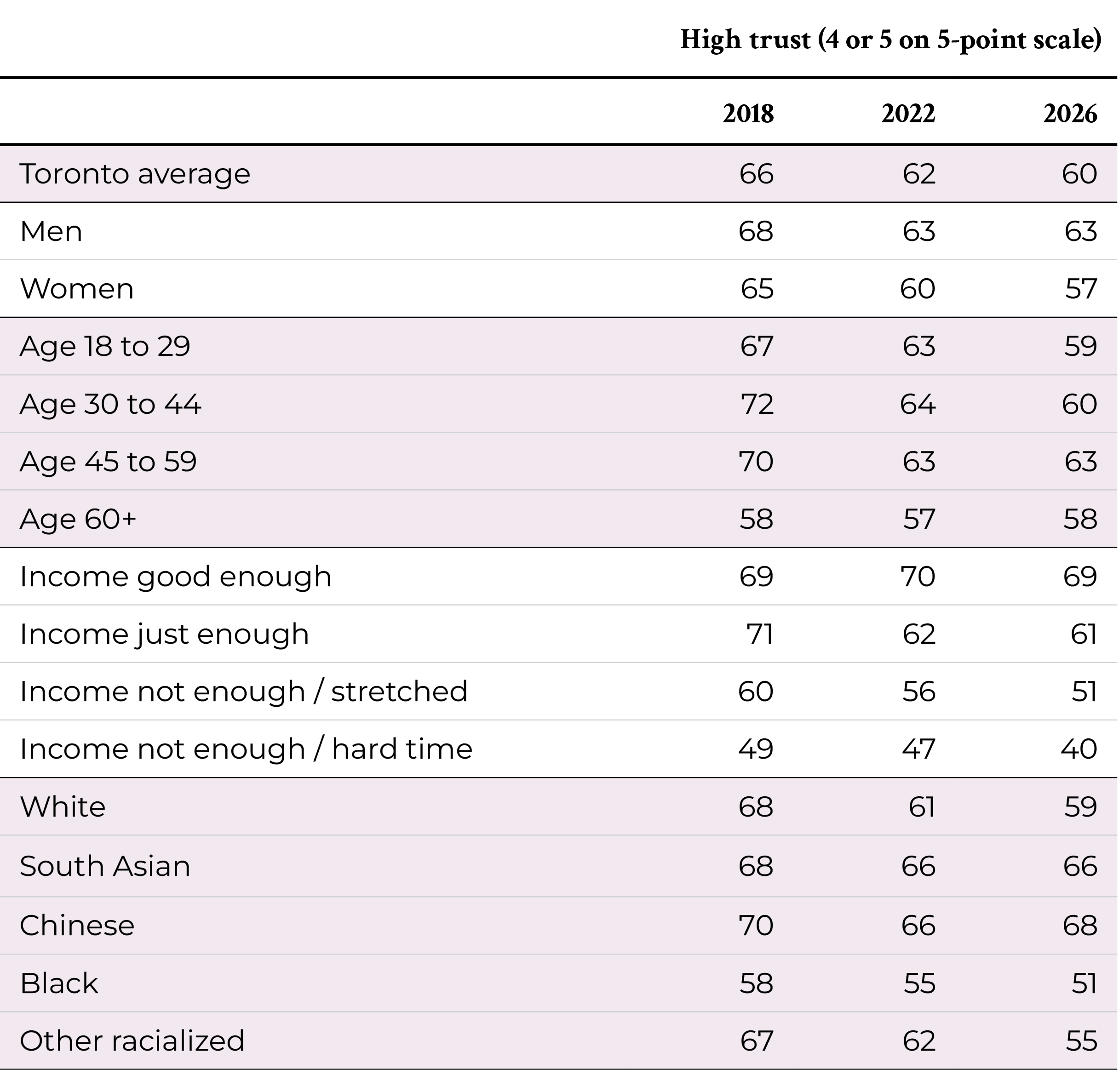
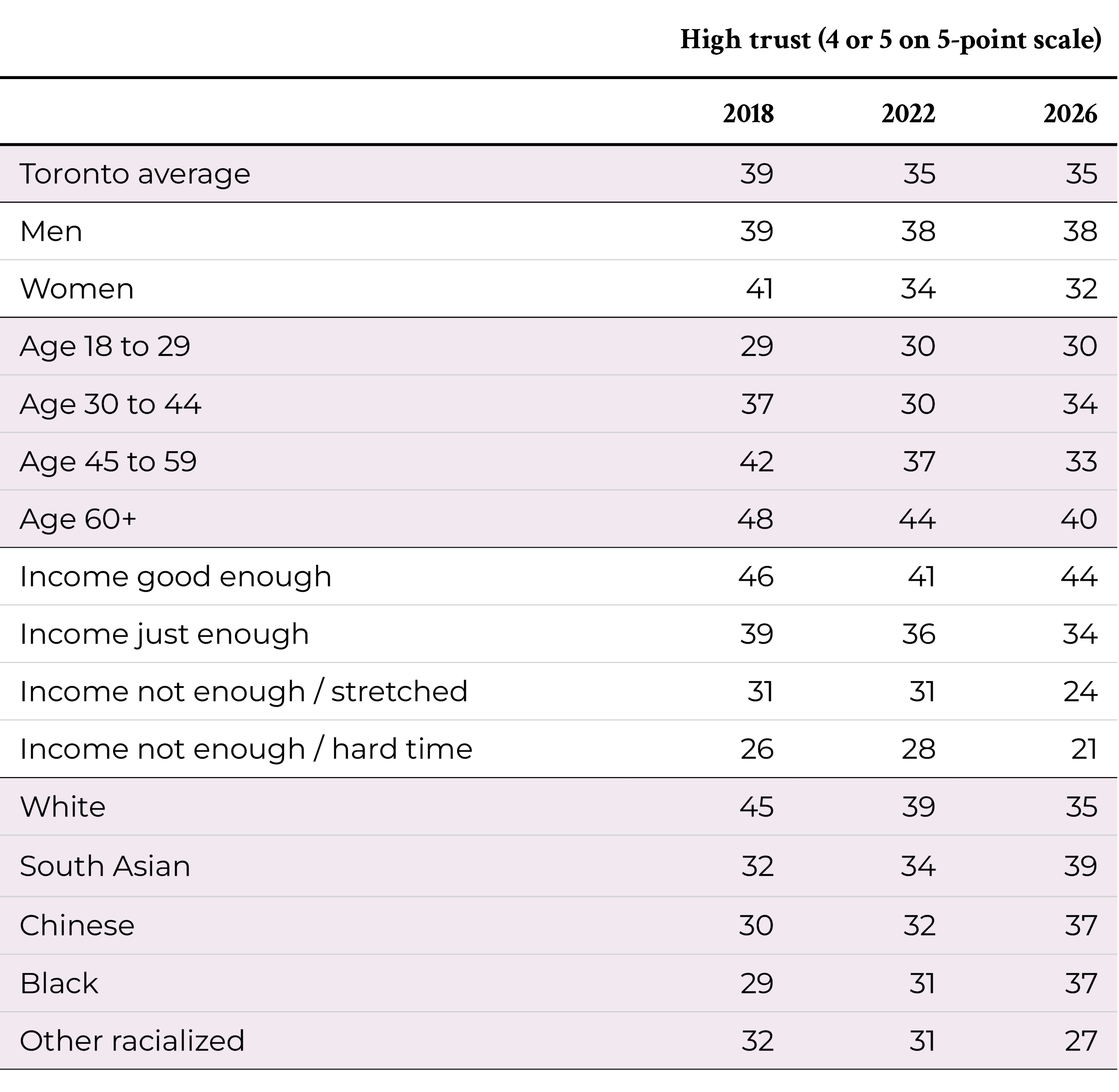
- While some measures of social trust declined between 2018 and 2026 (such as the proportion of Torontonians who say that “most people can be trusted”), trust in specific groups of people in the city has generally has held more steady.
- Most Torontonians have at least some trust, if not high trust, in different groups of people in the city, including both similar types of people (such as family) and those who are different (in terms of language, ethnic background or political views).
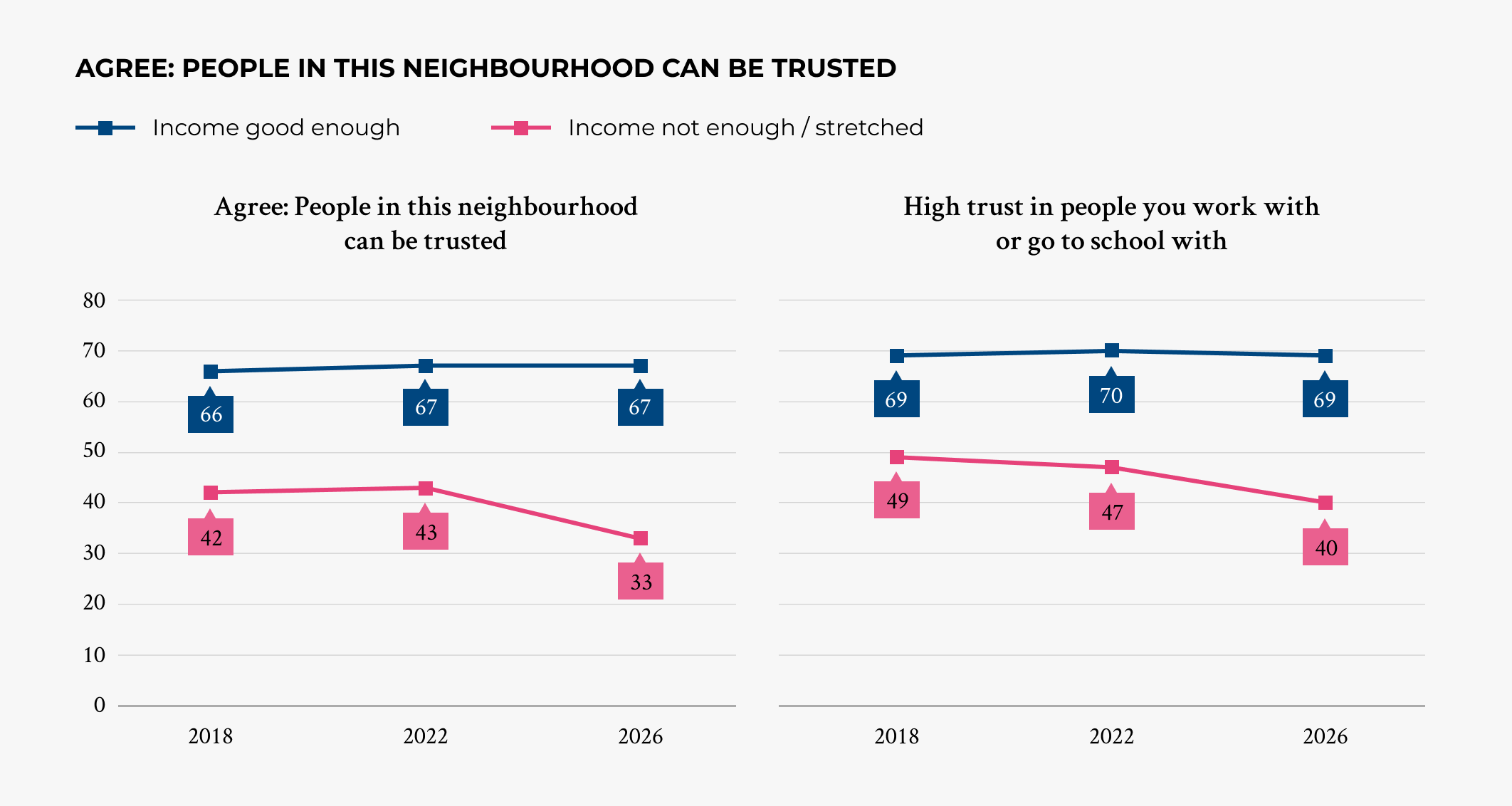
Gaps in trust between higher- and lower-income Torontonians are growing wider.
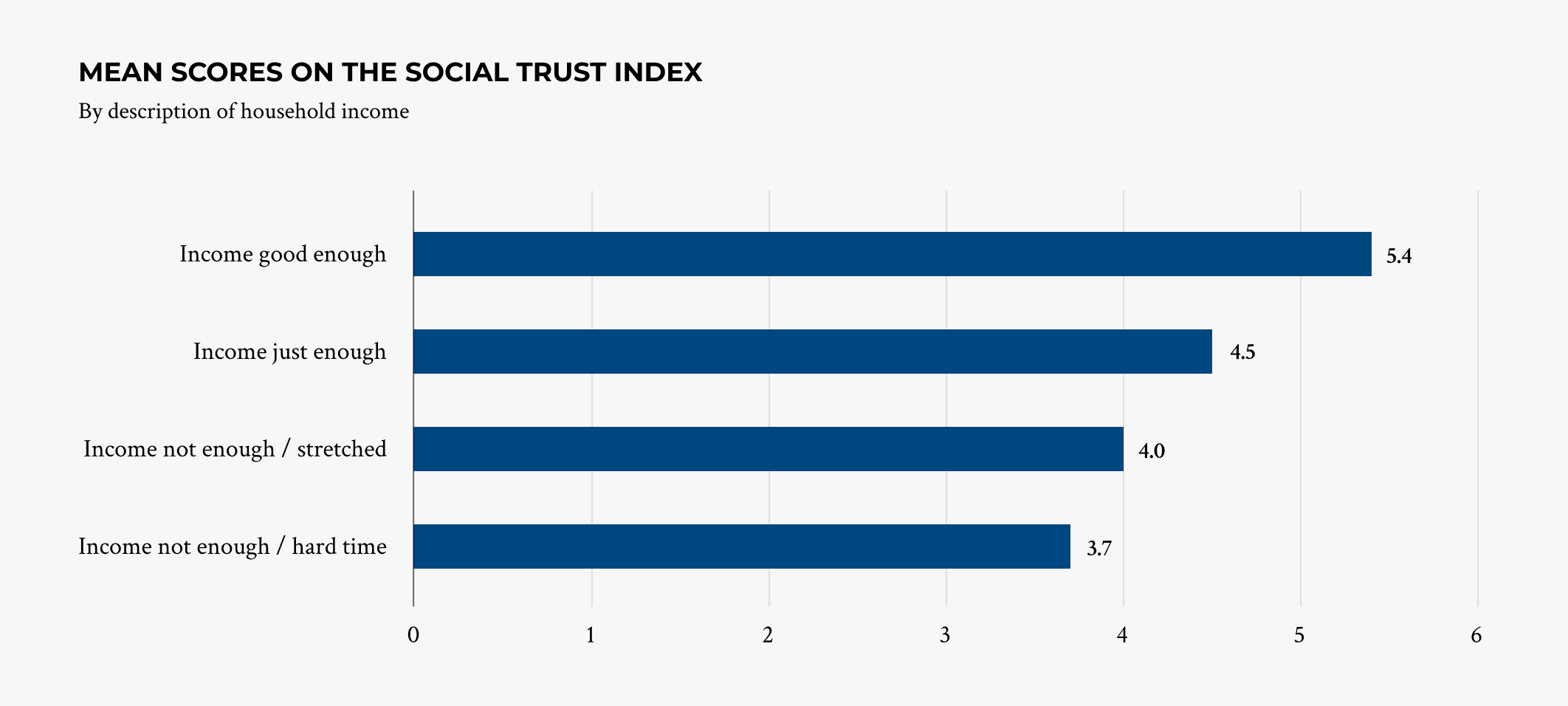
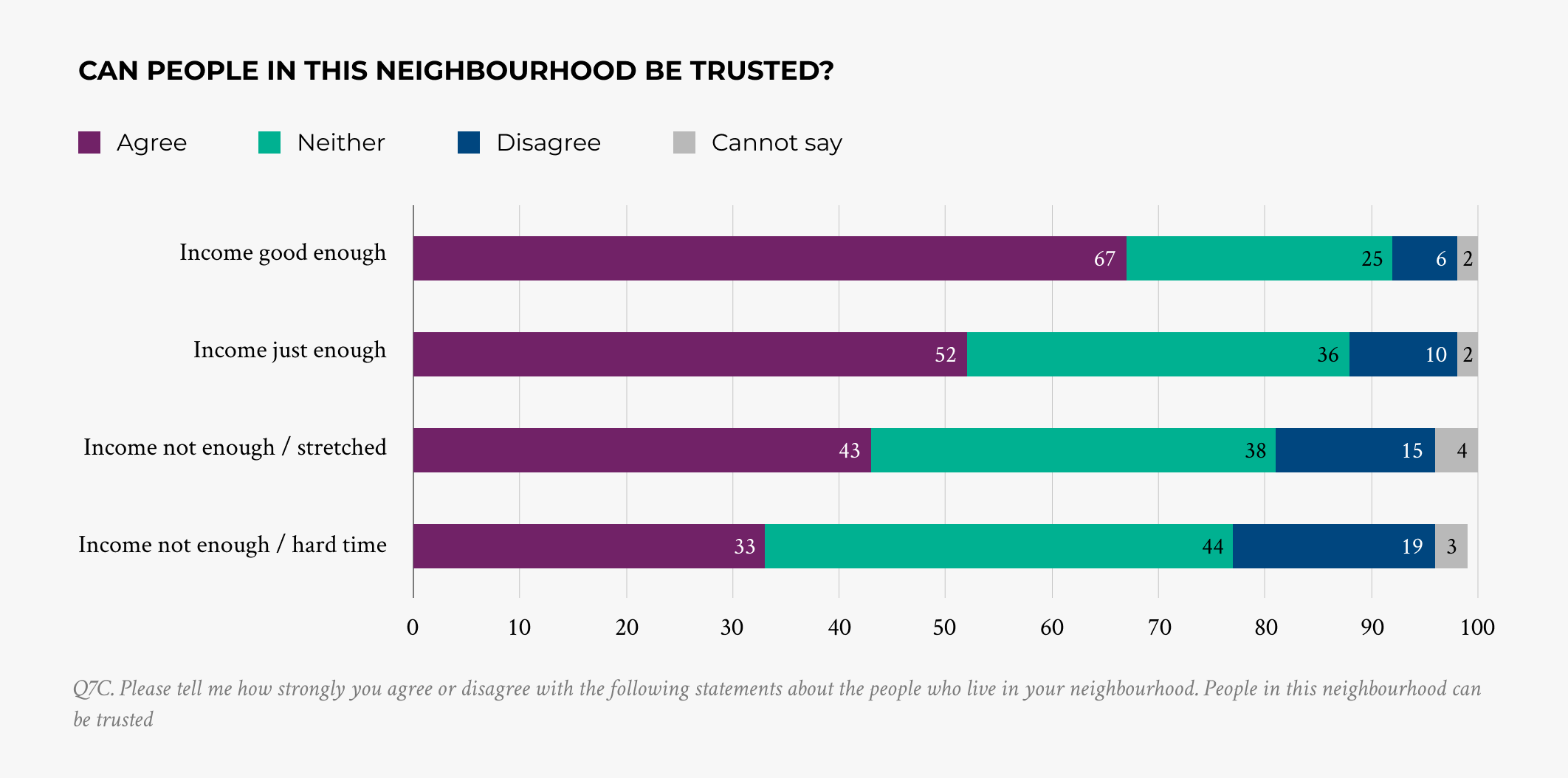
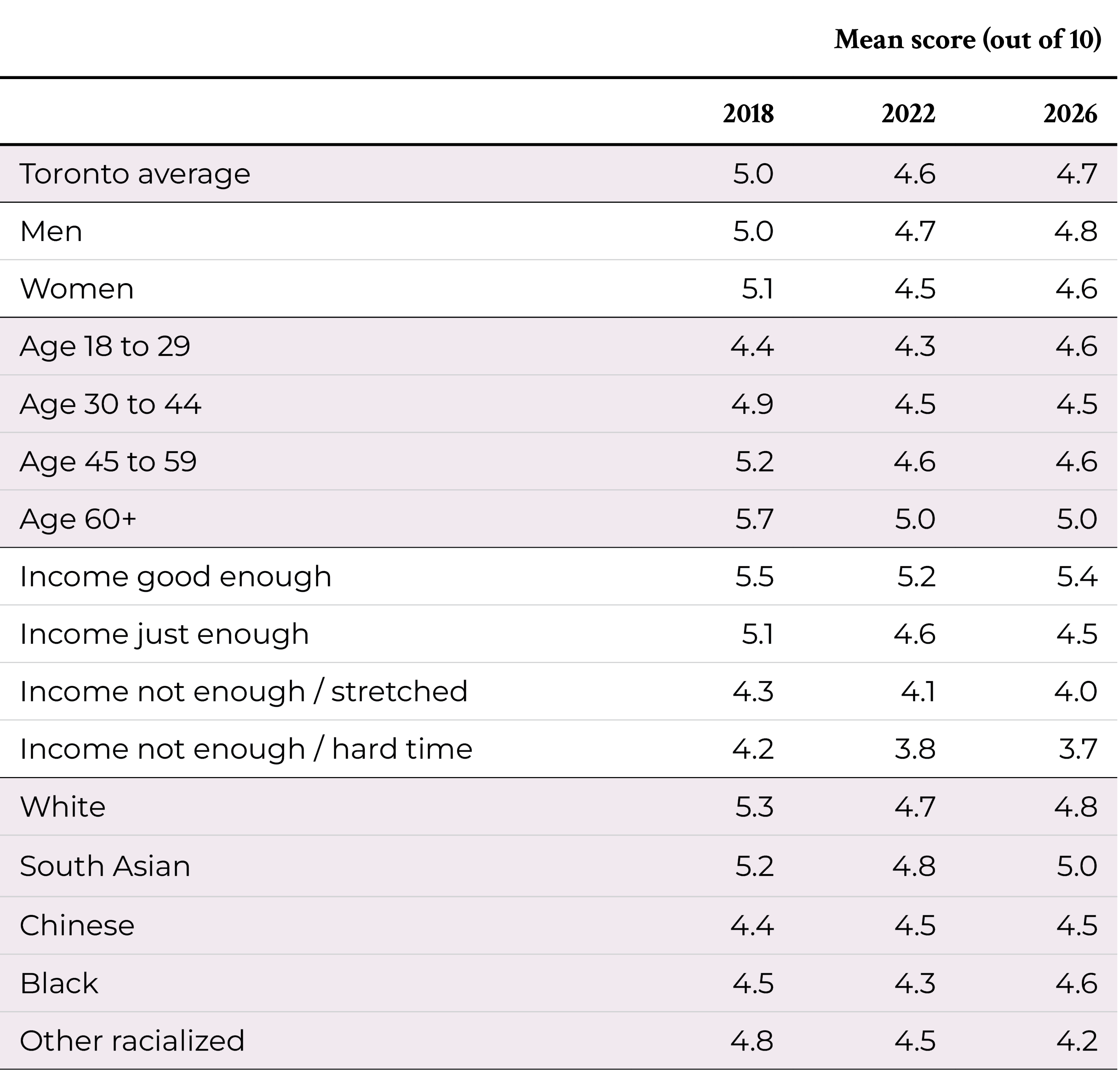
- Social trust varies consistently and significantly by income: those with higher incomes are more likely to express trust in others in their community.
- The gap is widening. Social trust is holding steady for those with more adequate incomes, but falling for those with greater income insecurity.
Confidence in local institutions has held steady
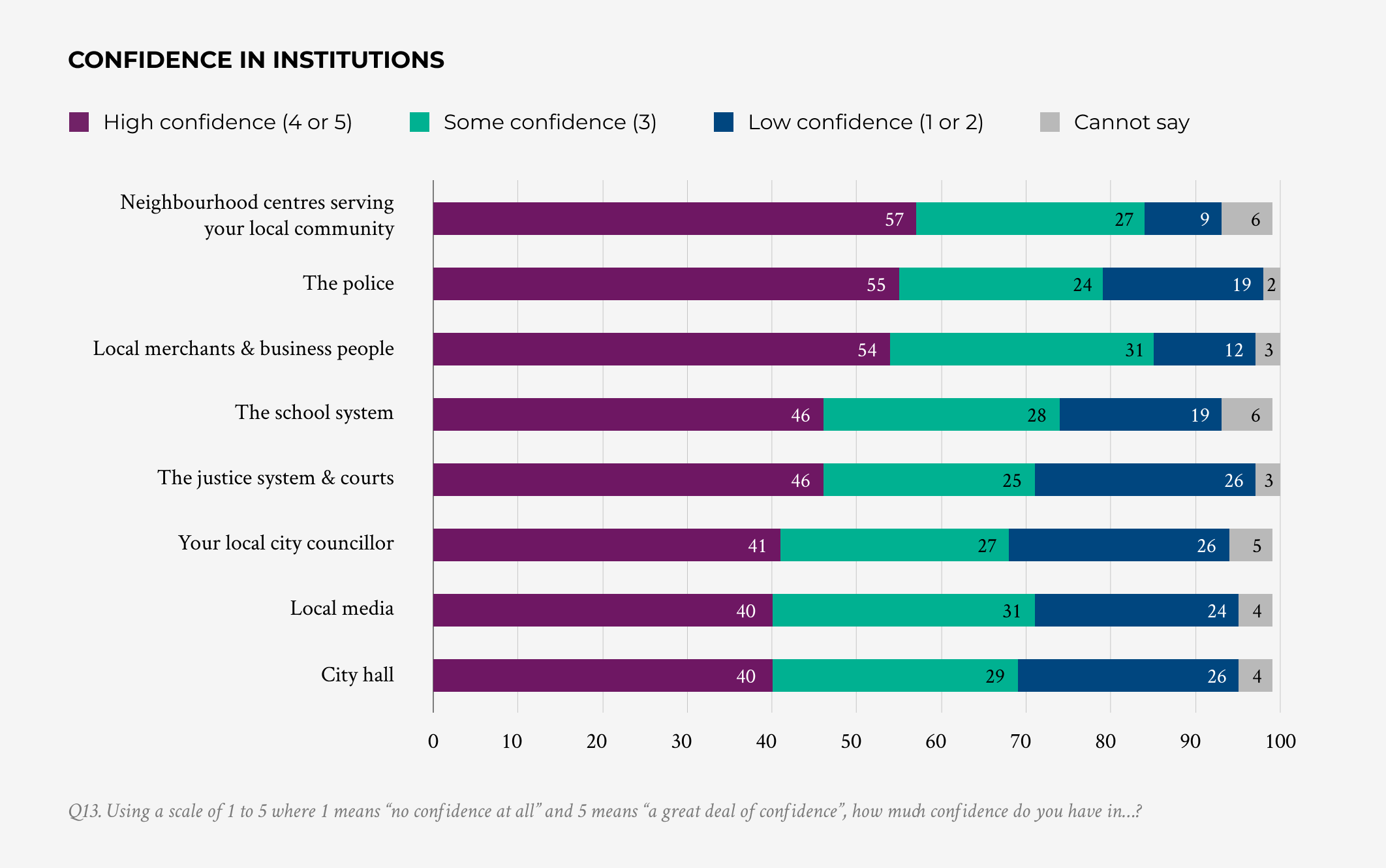
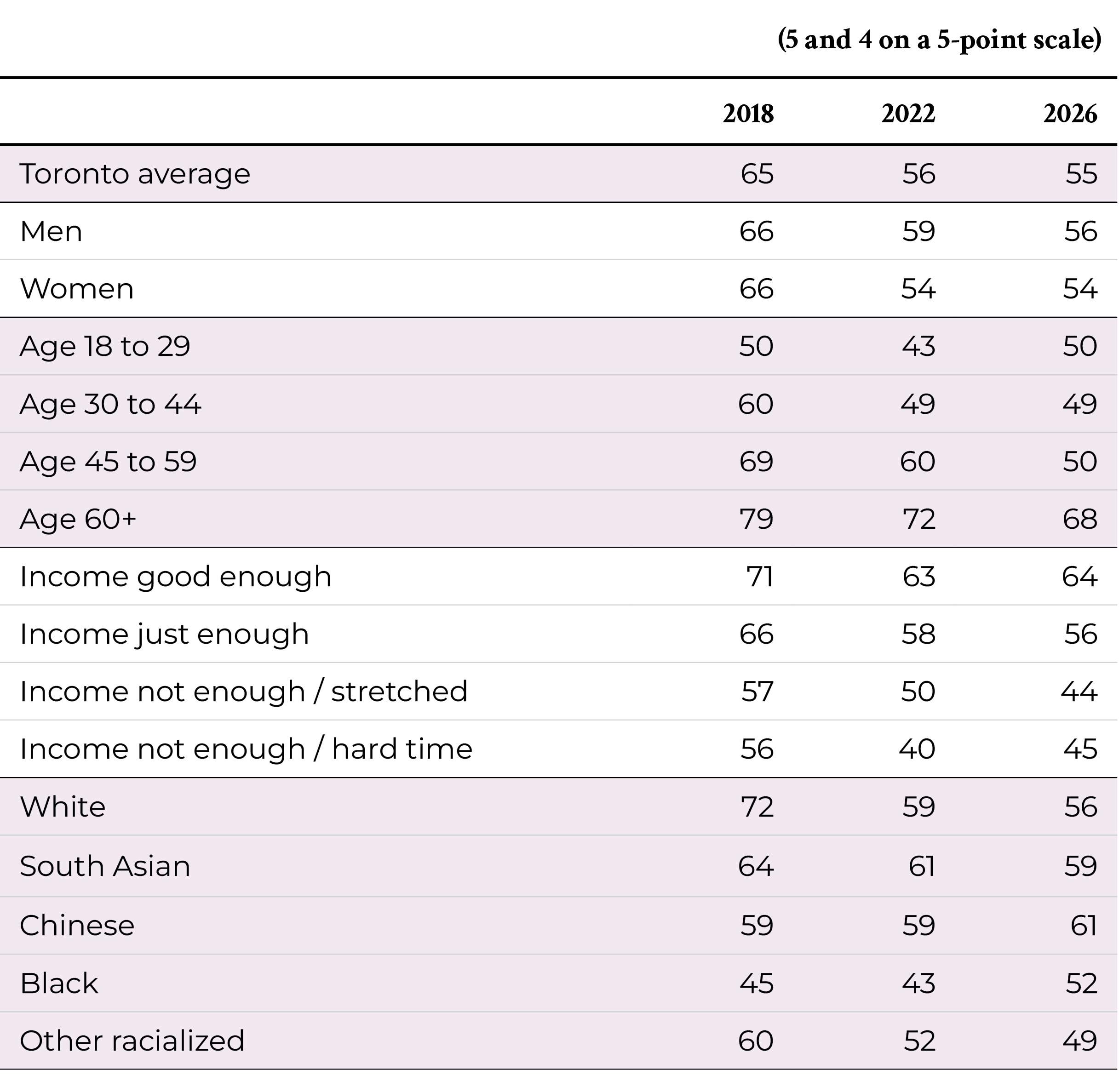
- Most Torontonians have at least some confidence in local institutions, including local businesses, city hall, local media and schools.
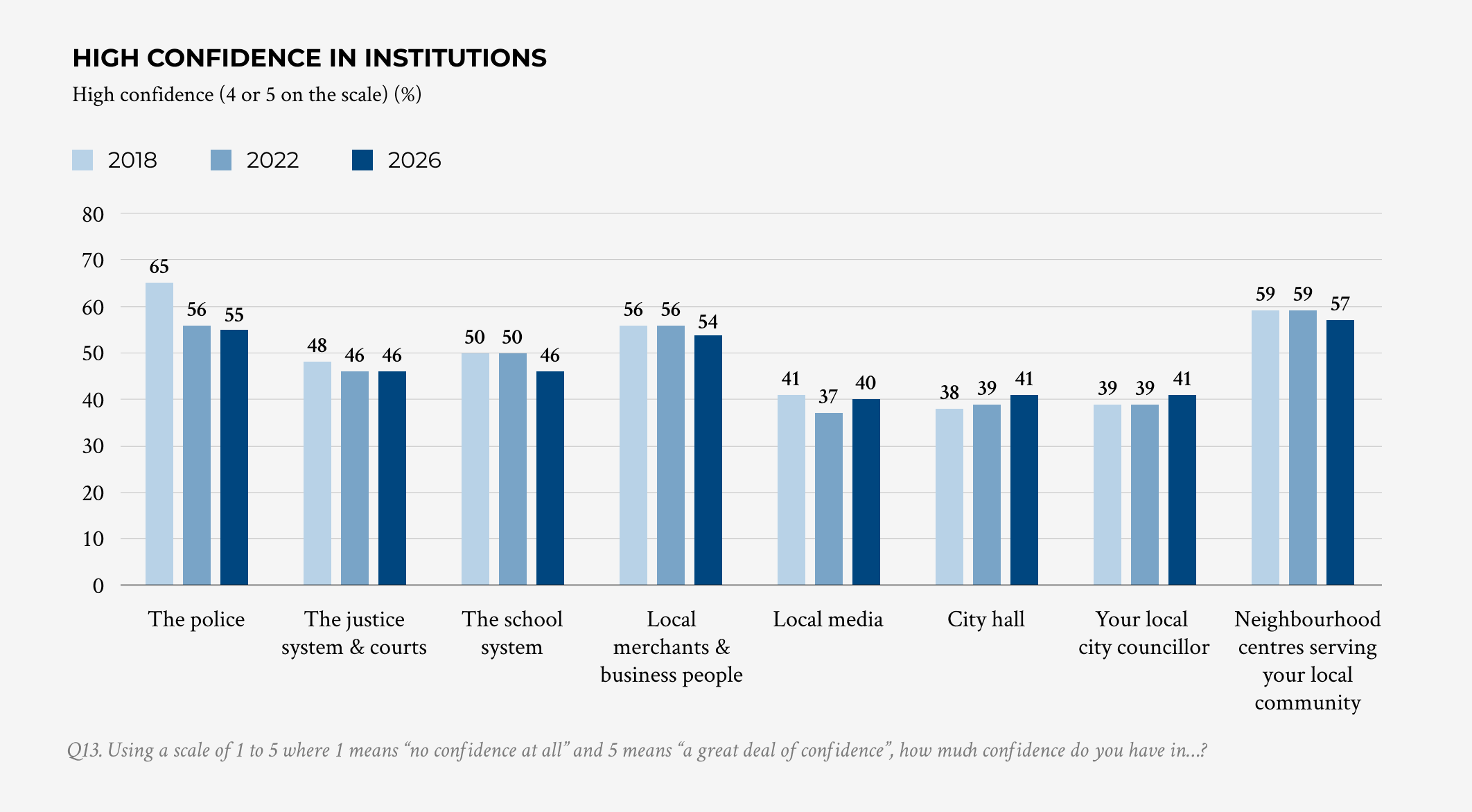
- The level of confidence in most local institutions is relatively unchanged since 2018.
- One exception is the police: confidence in the police fell by nine percentage points (from 65% to 56%) between 2018 and 2022; it is essentially unchanged, at 55%, in 2026.
What is social trust?
Social trust relates to the extent to which individuals trust (or distrust) others whom they have contact with or know. It can apply to relations among family members and friends, colleagues at work or school, neighbours, fellow citizens, and even strangers we pass in stores or on the street. Social trust underpins the types of day-to-day interactions that enable communities to function and thrive.
The social trust index
The results for the survey questions relating to social trust are combined into a single index that helps to demonstrate where social trust is strongest or weakest across a range of groups within the population, and how social trust has changed over time. Each index is scored from “0” (lowest possible score) to “10” (highest possible score).
Data Tables
See more results in the complete survey data tables here.
Numbers may not add to exactly 100% due to rounding.