


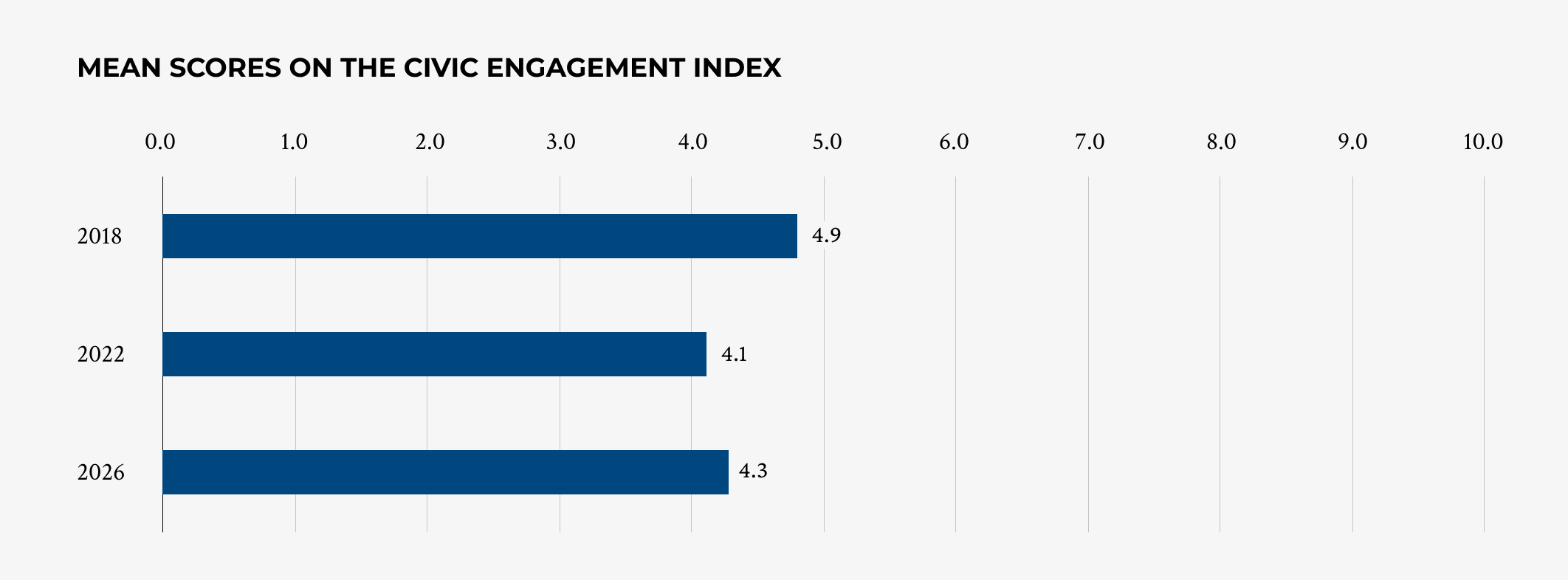
Overall, civic engagement in Toronto has increased in 2026 after declining between 2018 and 2022. This overall change is driven by an increase in the volunteering rate, as well as the level of interest in politics. But this has been partially offset by a decline in participation in groups and associations.

Civic engagement in Toronto has increased in 2026 after declining between 2018 and 2022.
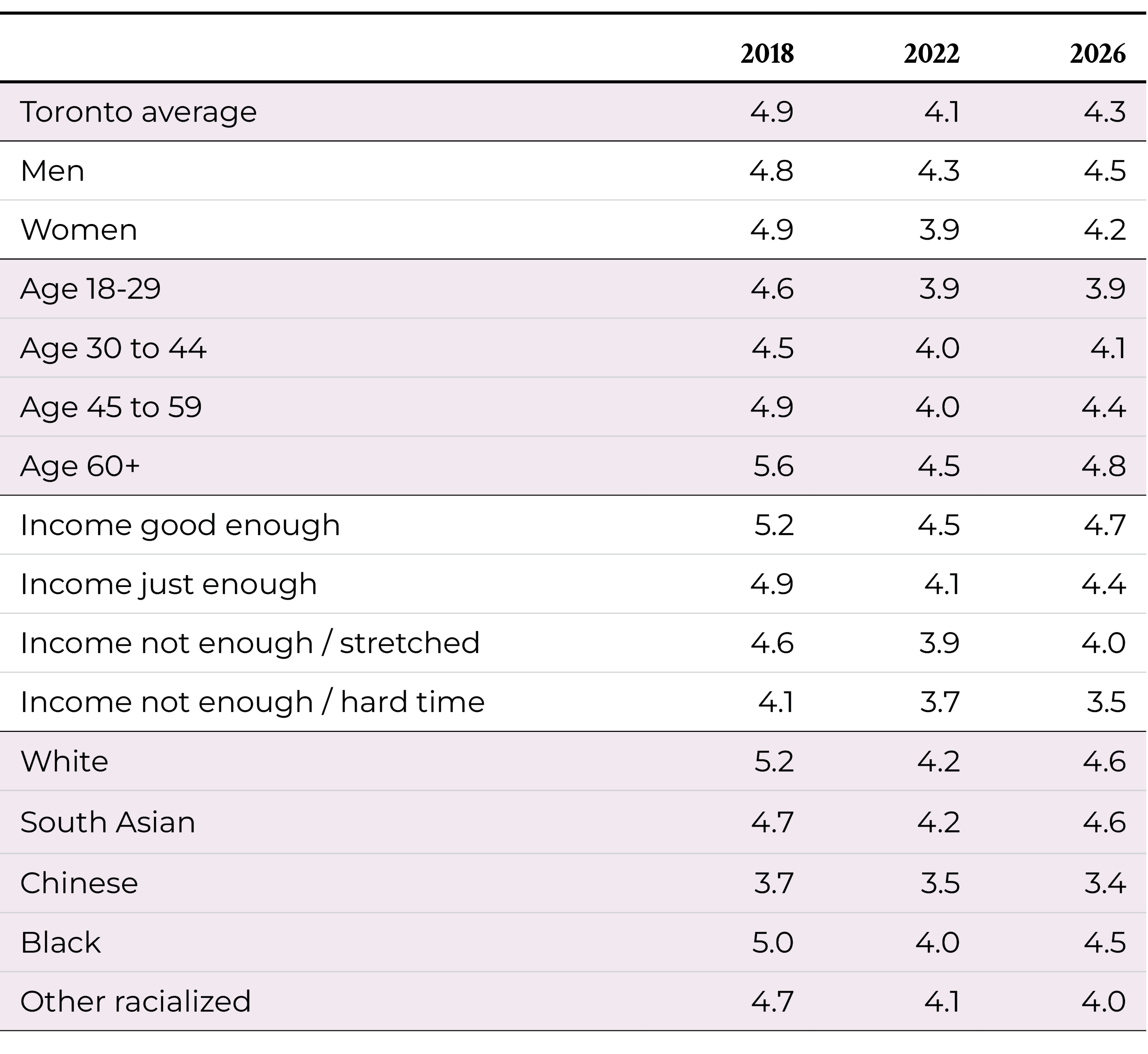
- The overall measure of civic engagement (an index score on a scale of 0 to 10) has increased modestly in 2026, having declined considerably between 2018 and 2022.
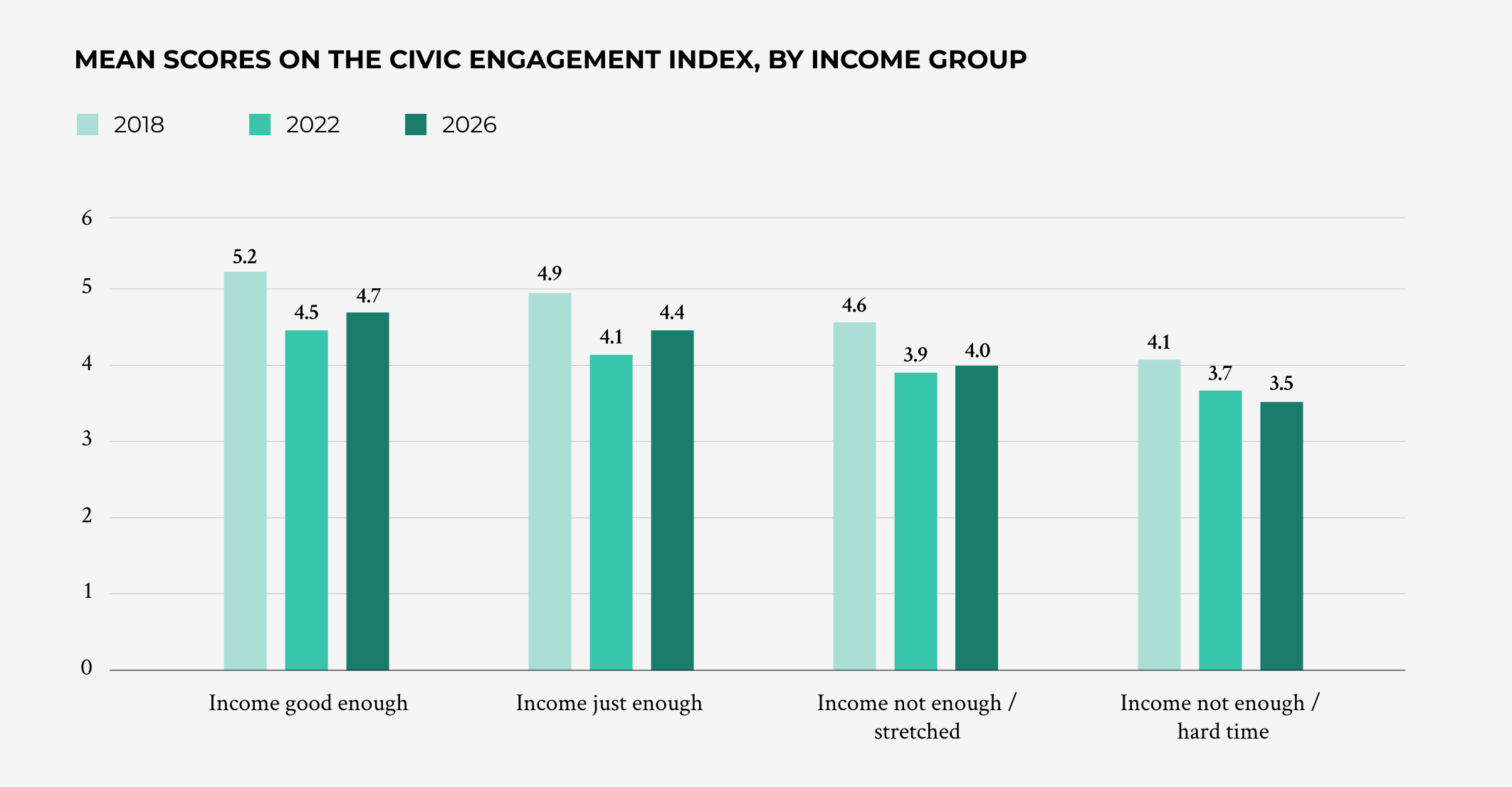
- The extent of civic engagement in the city varies considerably based on income: civic engagement index scores are lower for those facing income insecurity, suggesting that low income poses a barrier to participation.
- Civic engagement index scores increased between 2022 and 2026 for those in the top three income groups, but not for those who describe their incomes as being not enough for them, such that they are having a hard time.
- Civic engagement index scores are currently also higher for older compared to younger residents of the city, and for men compared to women. They are lower for Torontonians who identify as Chinese.
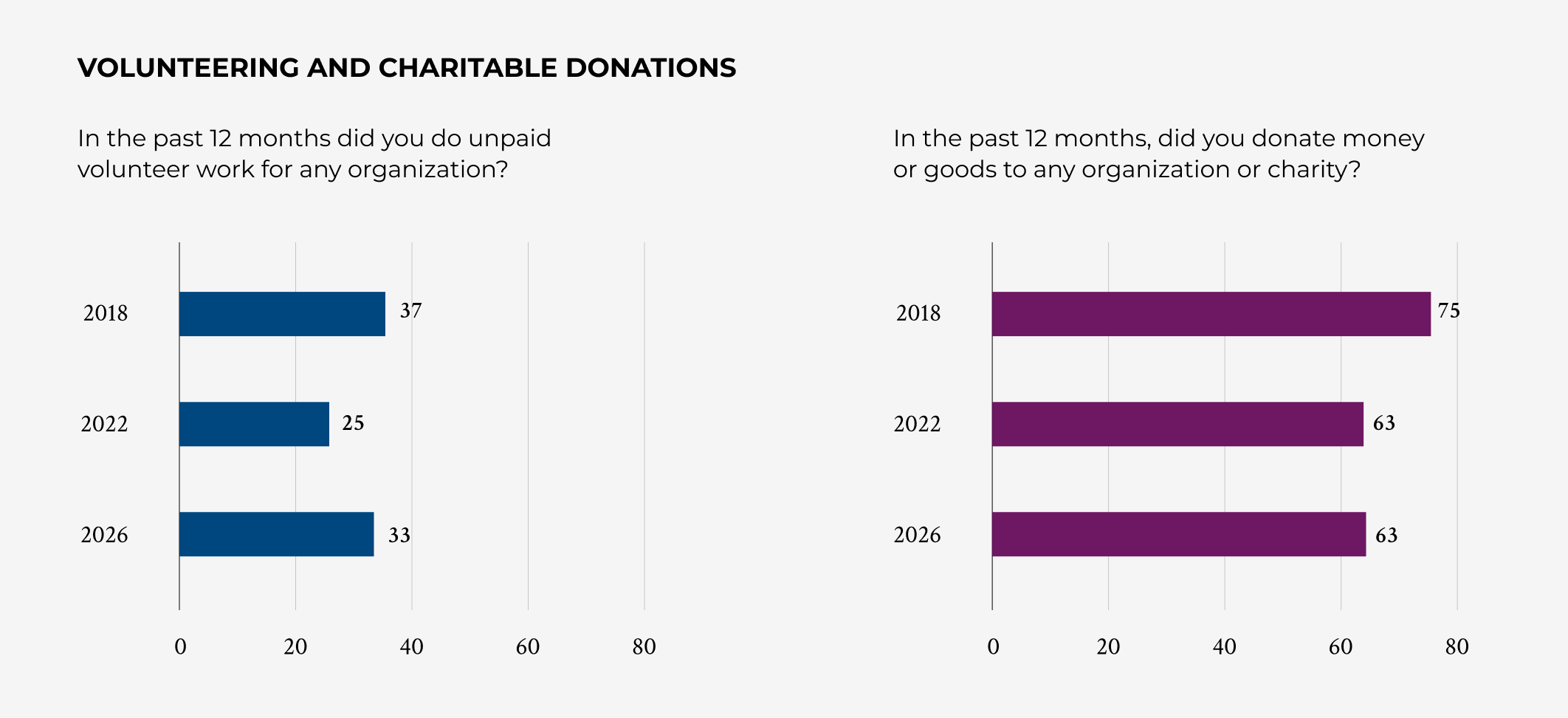
The rate of volunteering in the City of Toronto has modestly increased in 2026 after declining between 2018 and 2022.
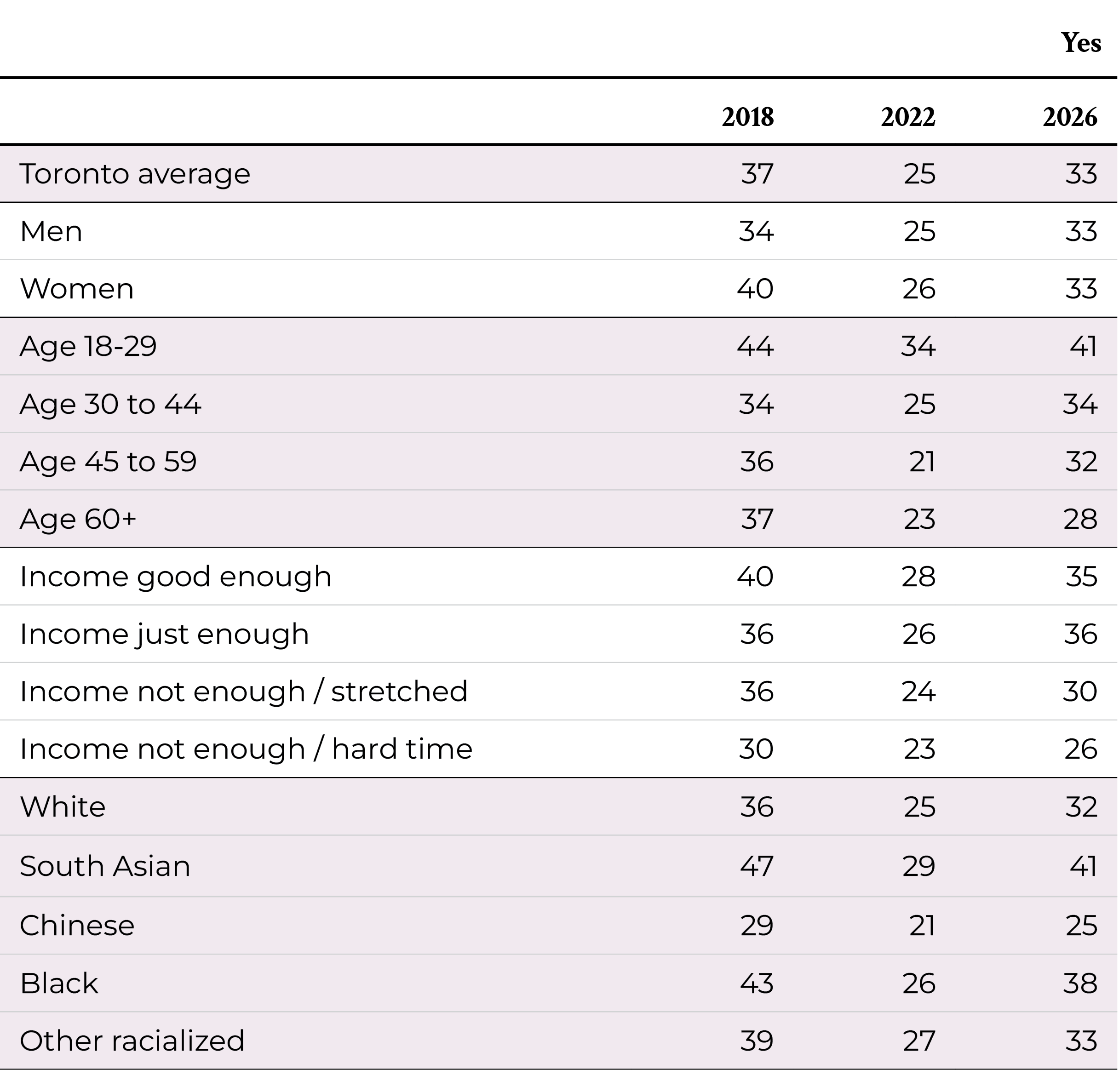
- One in three Torontonians (33%) did unpaid volunteer work for an organization in the past 12 months. This is eight percentage points higher than in 2022.
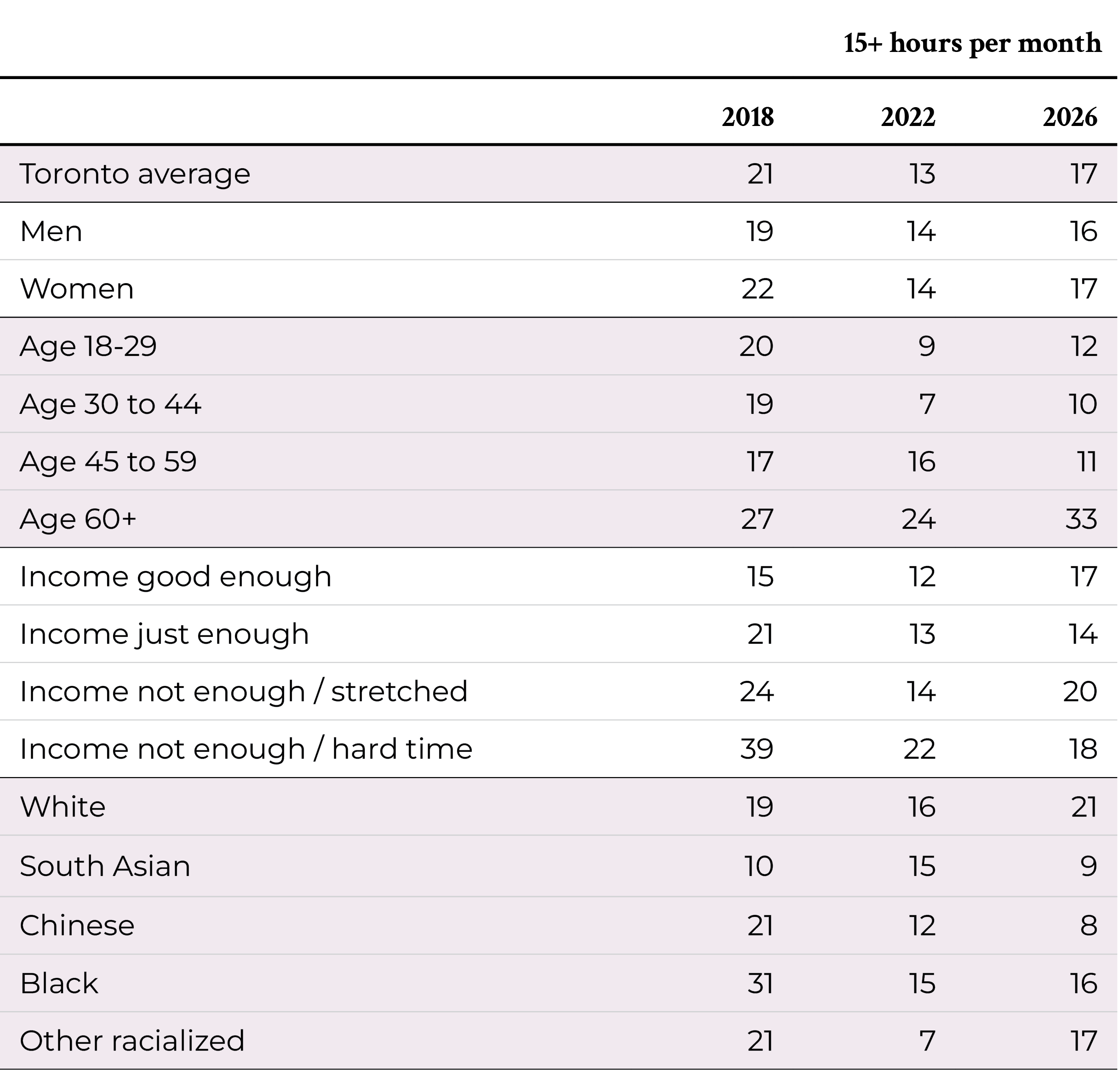
- Among those who volunteer, the proportion that does so for about 15 hours per month or more also increased slightly, from 13% to 16%.
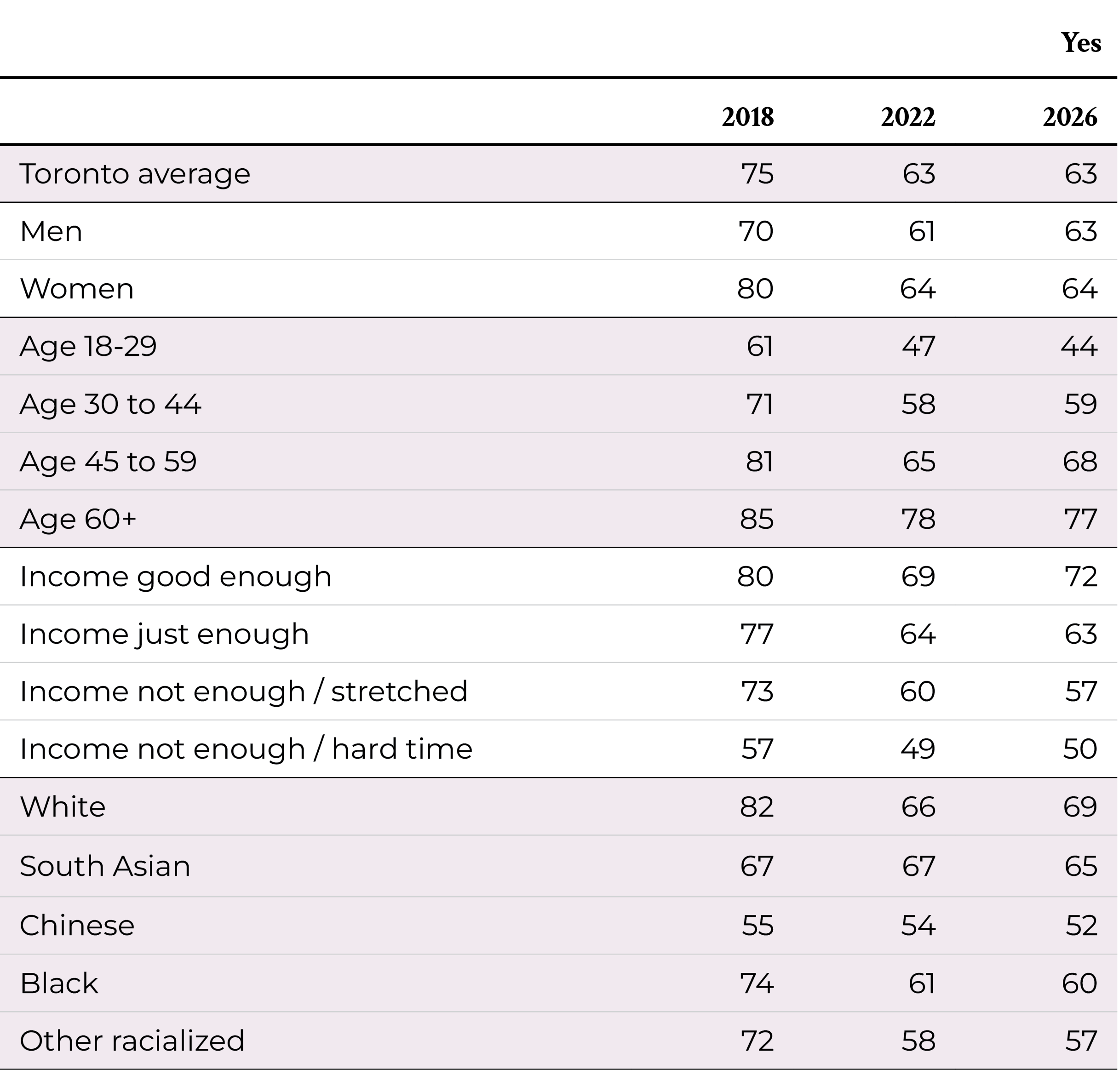
- 63% of Torontonians donated money or goods to an organization or charity in the past 12 months. This is unchanged from the proportion in 2022.
- The proportion of Torontonians who volunteered in the past 12 months is higher among younger compared to older residents. However, older volunteers, on average, do so for more hours per month.
- Compared to 2018, fewer older city residents are volunteering, but among those who do, a greater share are doing so for more than 15 hours per month.
- The volunteering rate varies by income; it declines as income insecurity increases. And among lower-income city residents who volunteer, the proportion doing so for more than 15 hours per month has dropped considerably since 2018.
- Older Torontonians and those with higher incomes are much more likely than their younger and lower-income counterparts to have made a charitable donation in the past 12 months.
Participation or membership in groups and associations in Toronto has been declining. Yet, just over one in two Torontonians agree that they are interested in finding a social group or club in their community that they could join.
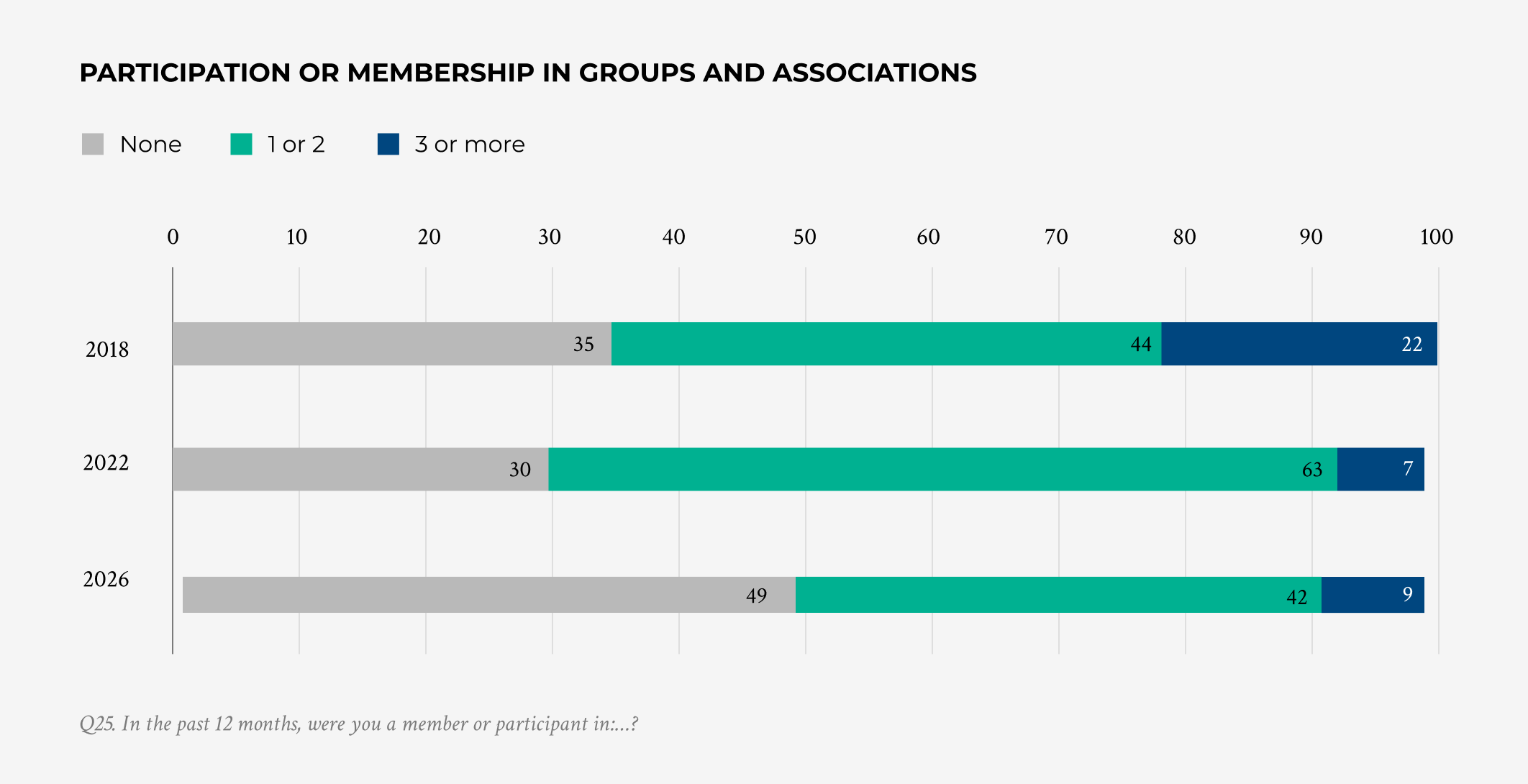
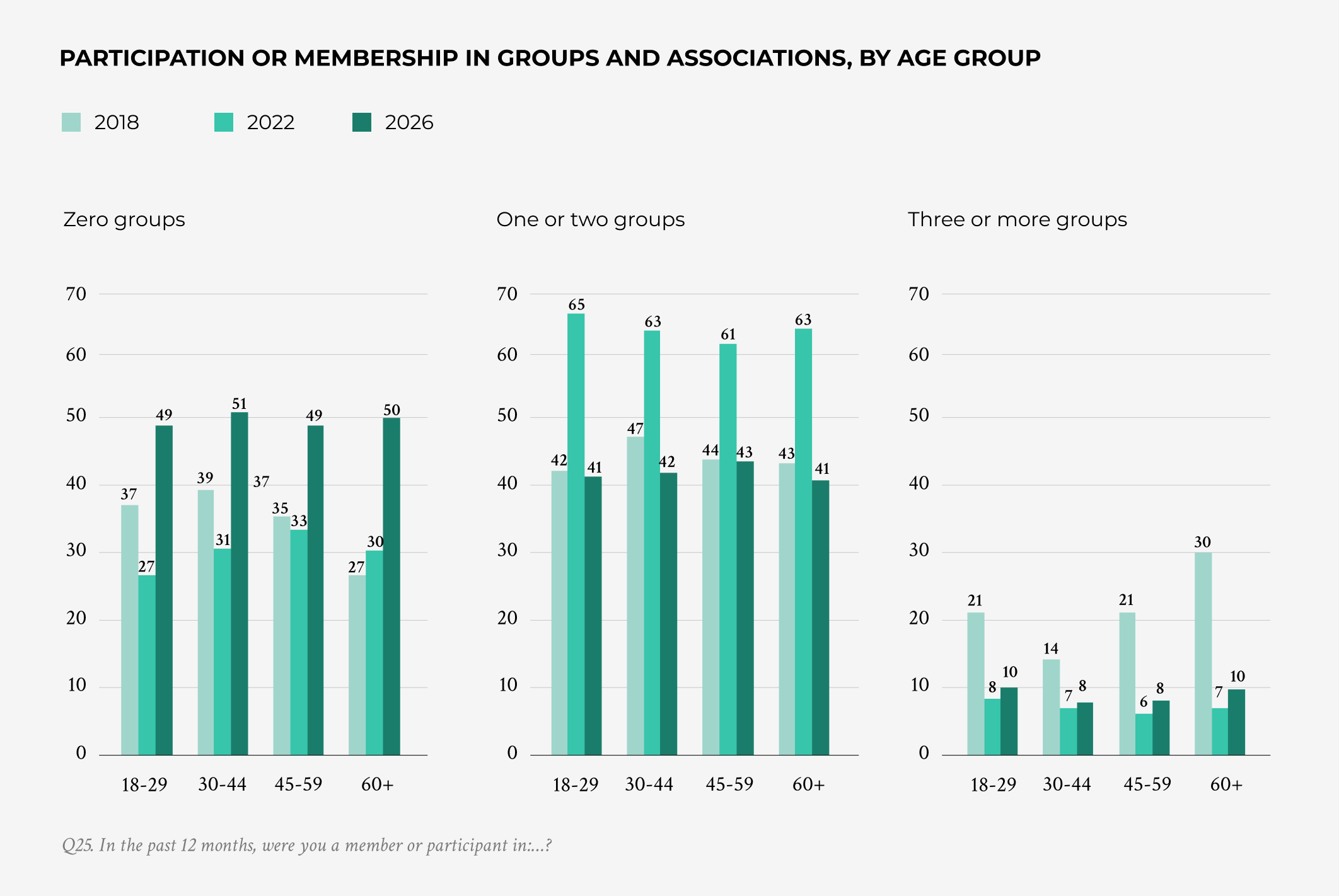
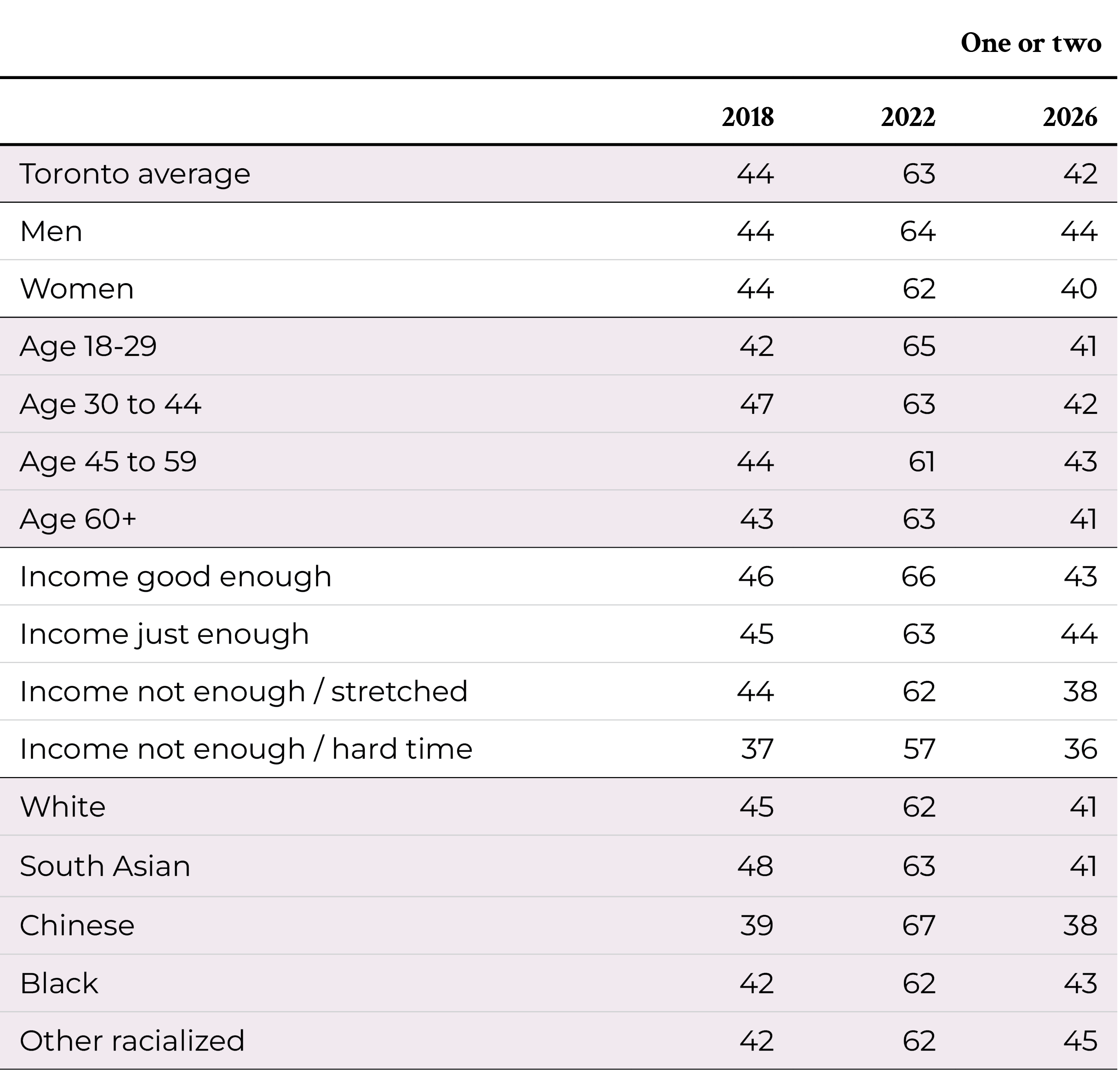
- Participation or membership in groups and associations in Toronto has been declining. On average, city residents participated in 1.44 groups (in the past 12 months) in 2018, compared to 1.01 in 2022, and 0.88 in 2026.1
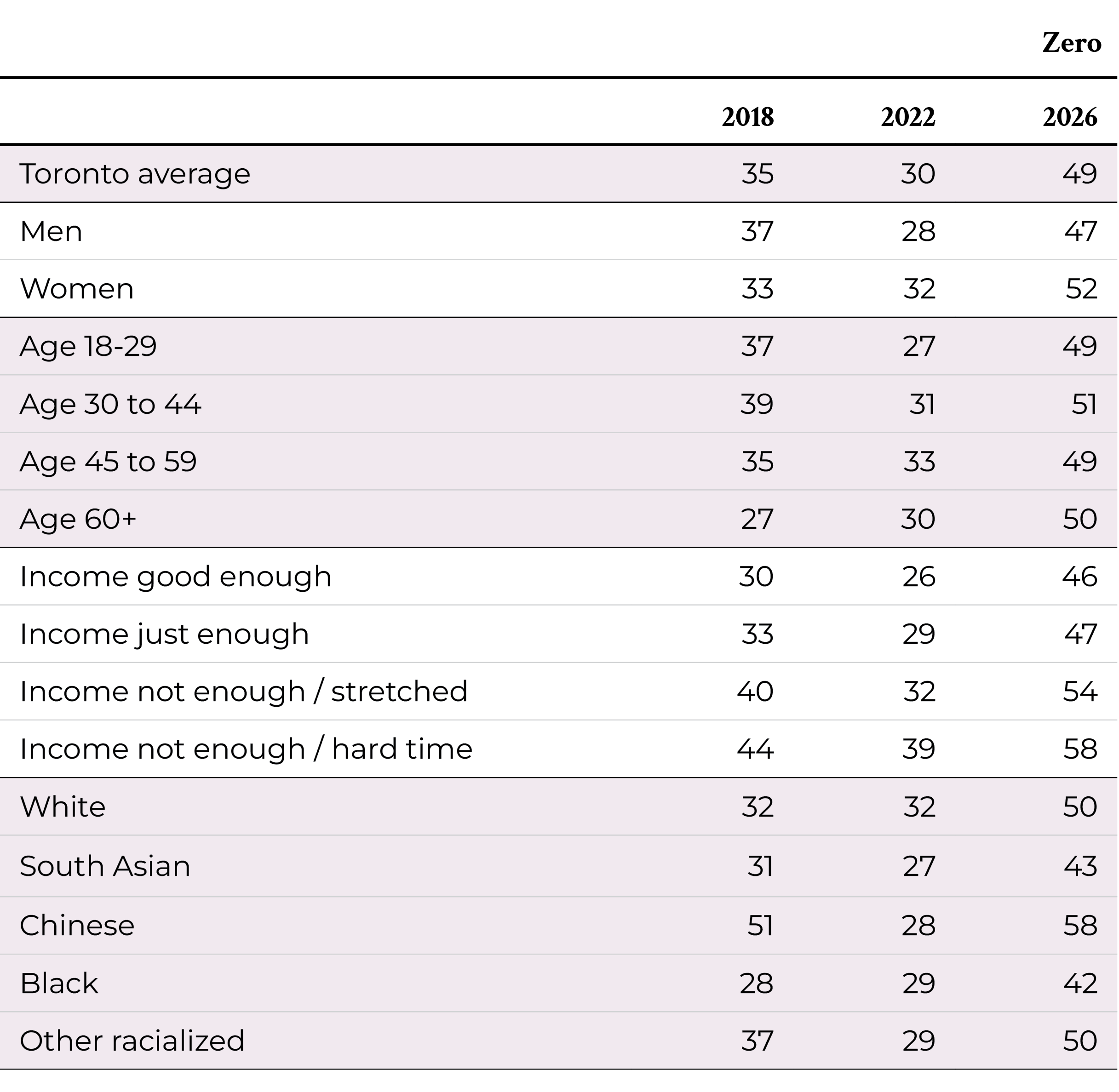
- In 2026, one in two city residents (49%) participated in no groups in the past 12 months; this compared to 35% in 2018.
- While the proportion participating in no groups increased by 14 percentage points on average, this increase was higher (plus 23 points, from 27% to 50%) among those age 60 and older.
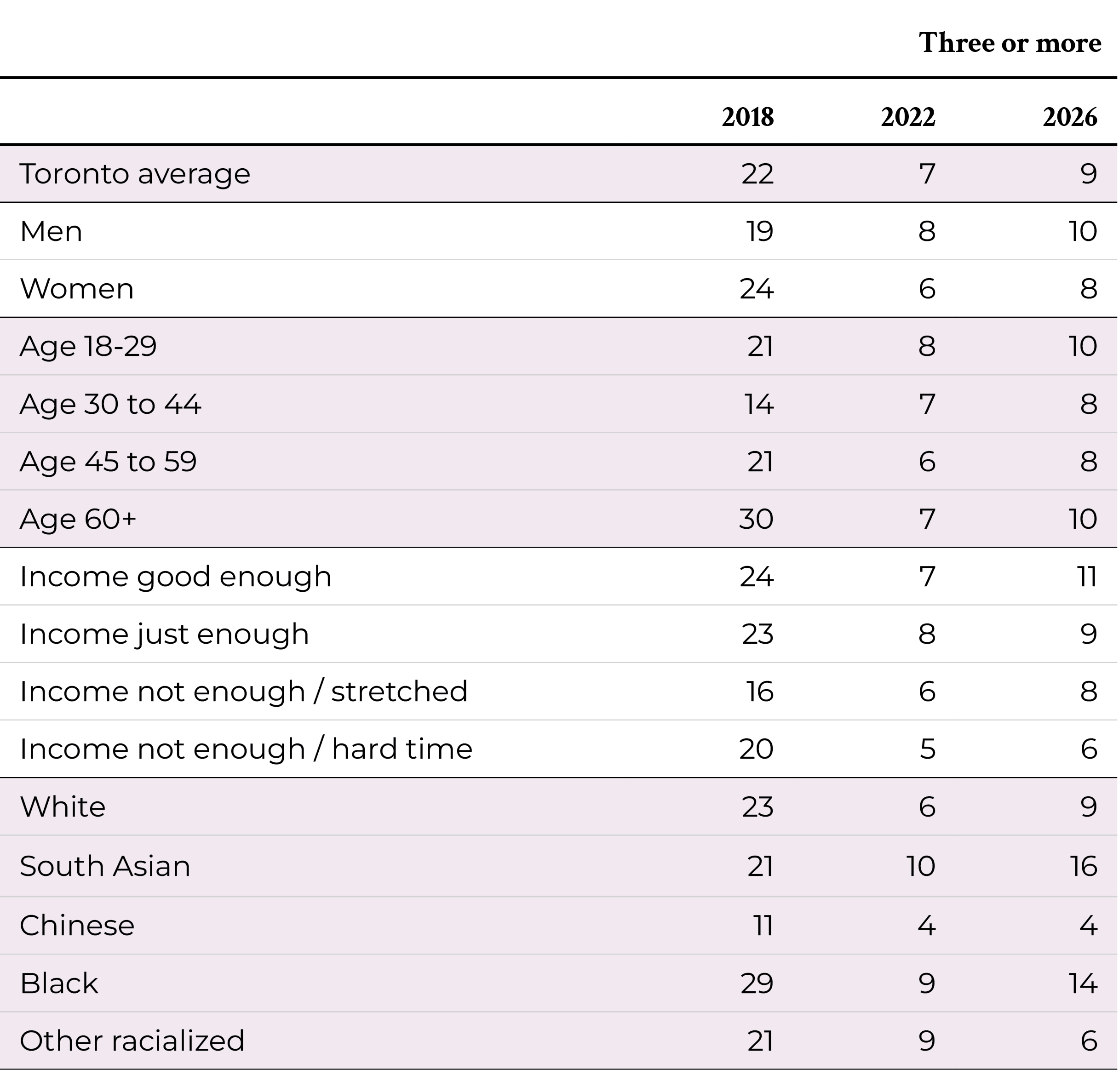
- Similarly, the proportion participating in three or more groups decreased by 13 percentage points on average (from 22% to 9%), but by 20 points (from 30% to 10%) among those age 60 and older.
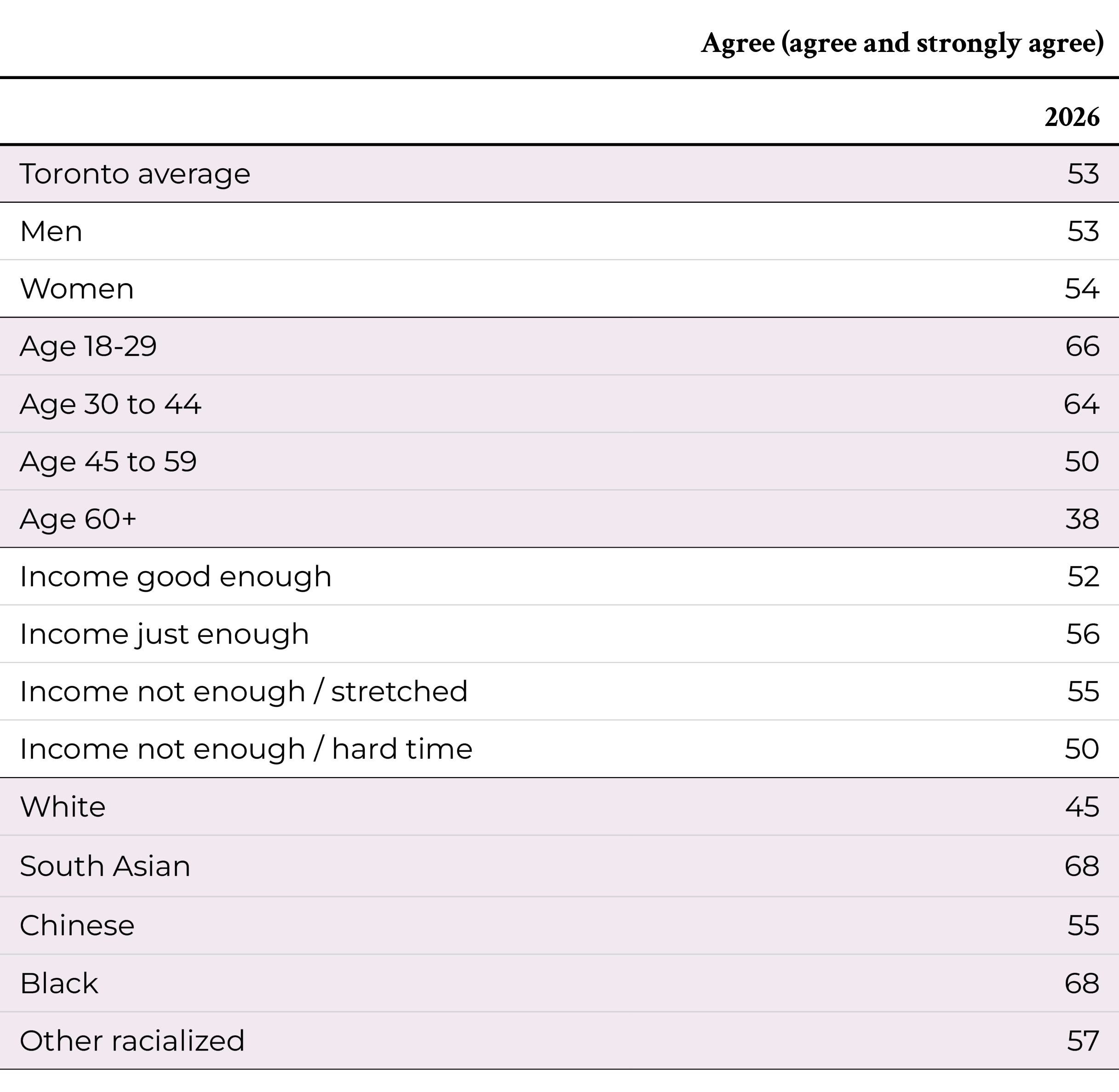
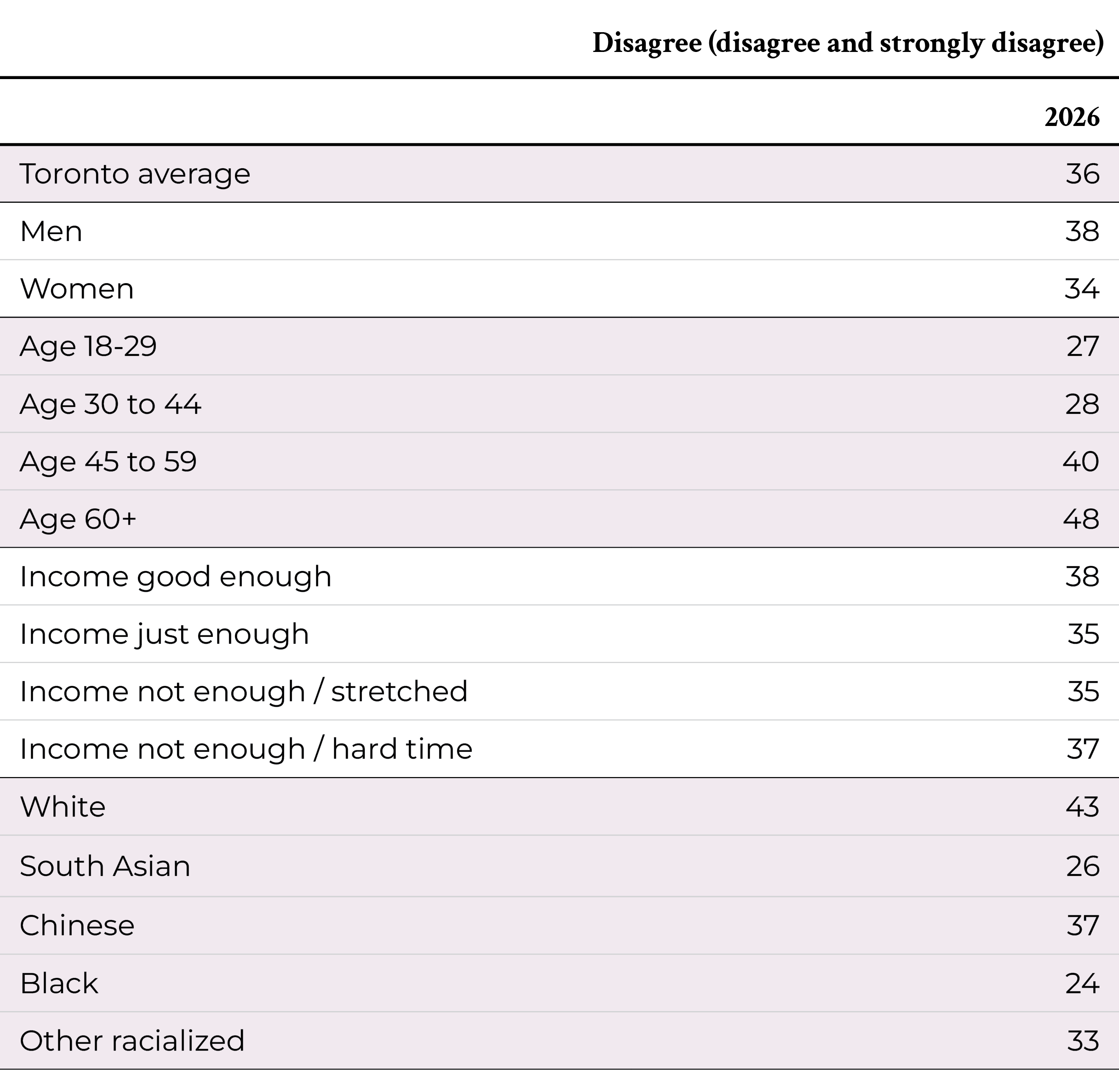
- Just over one in two Torontonians (53%) agree that they are interested in finding a social group or club in their community that they could join.
- The proportion that are interested in finding a community group or club to join is higher among those who are already more active: 73% of those who participated in three or more groups in the past 12 months agree they are interested in finding another group to join, compared to 59% of those who participated in one or two groups, and 45% of those who participated in no groups.
- Younger Torontonians are more interested in finding a community group or club to join: 66% of those age 18 to 29 and 63% of those age 30 to 44 agree they are interested, compared to 50% of those age 45 to 59 and 38% of those age 60 and older.
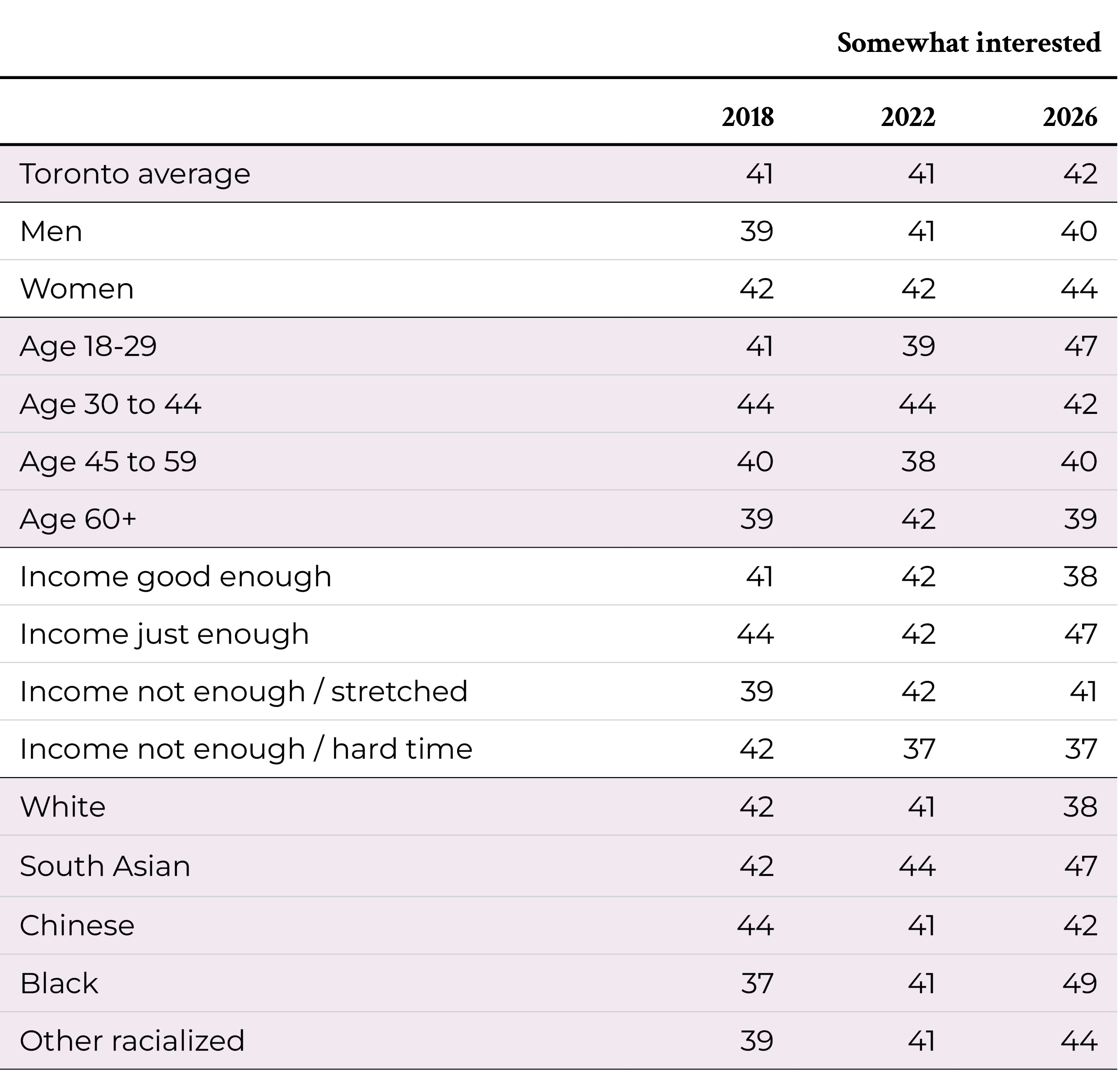
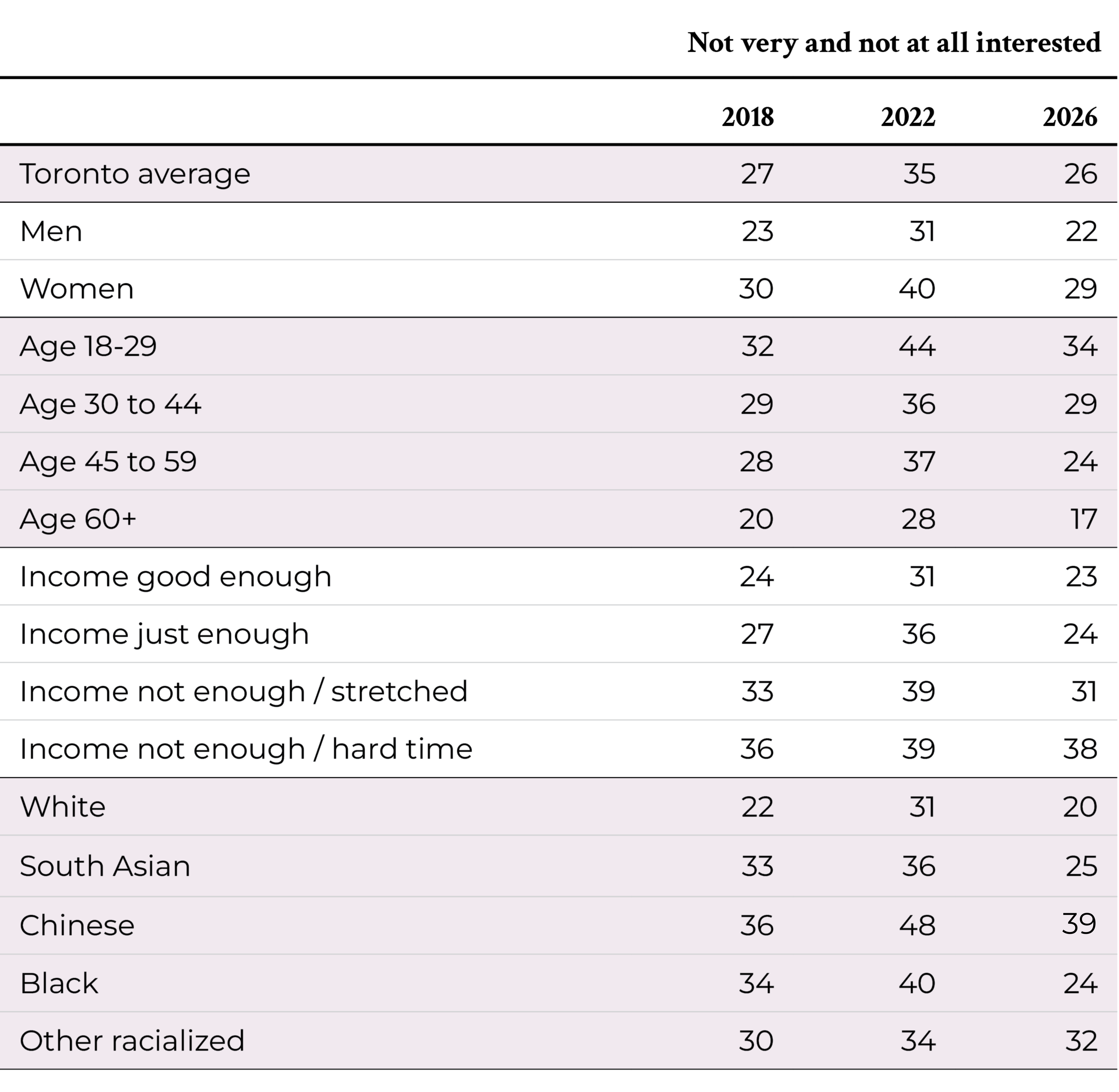
Interest in politics has increased, particularly among older Torontonians.
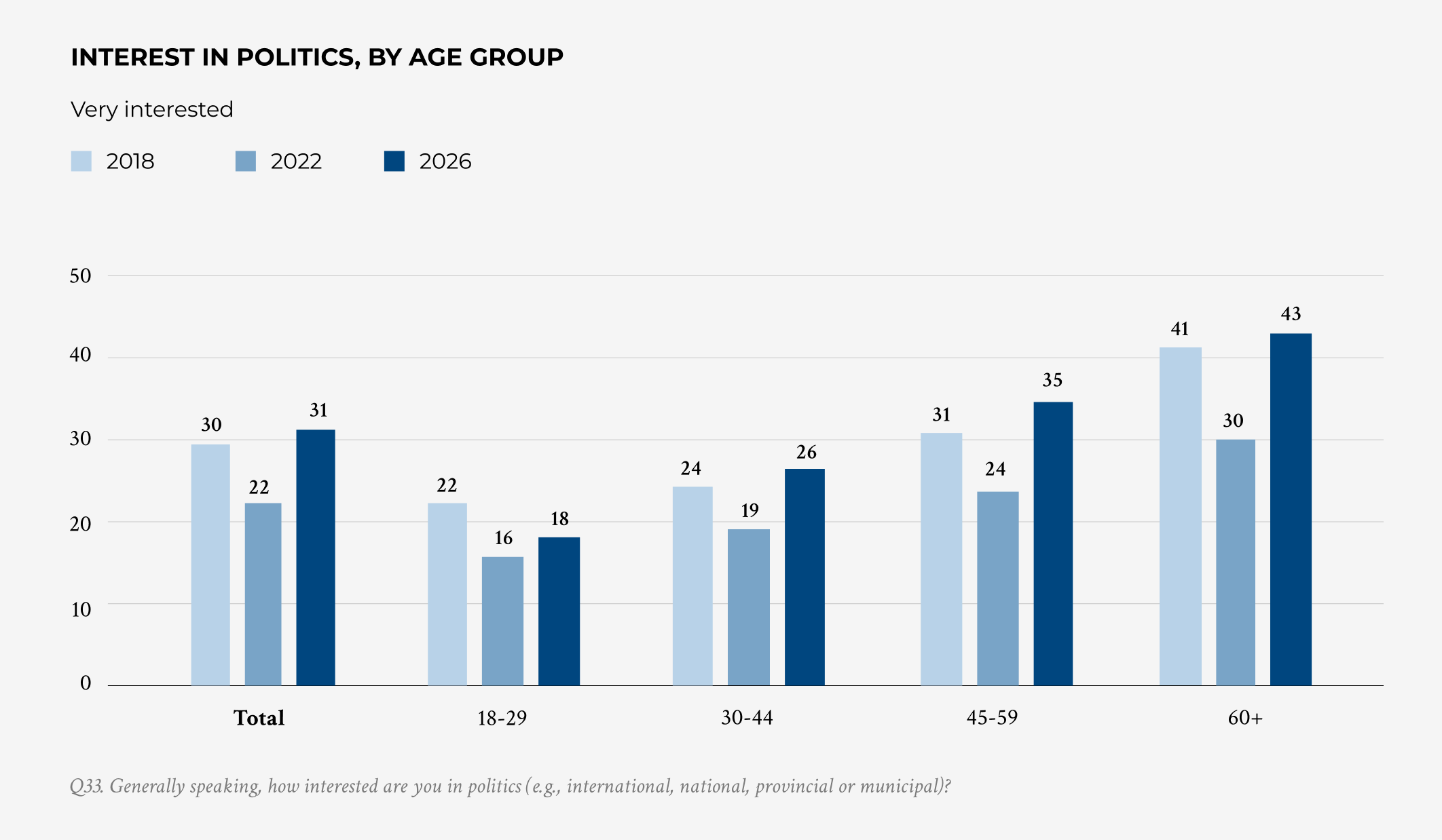
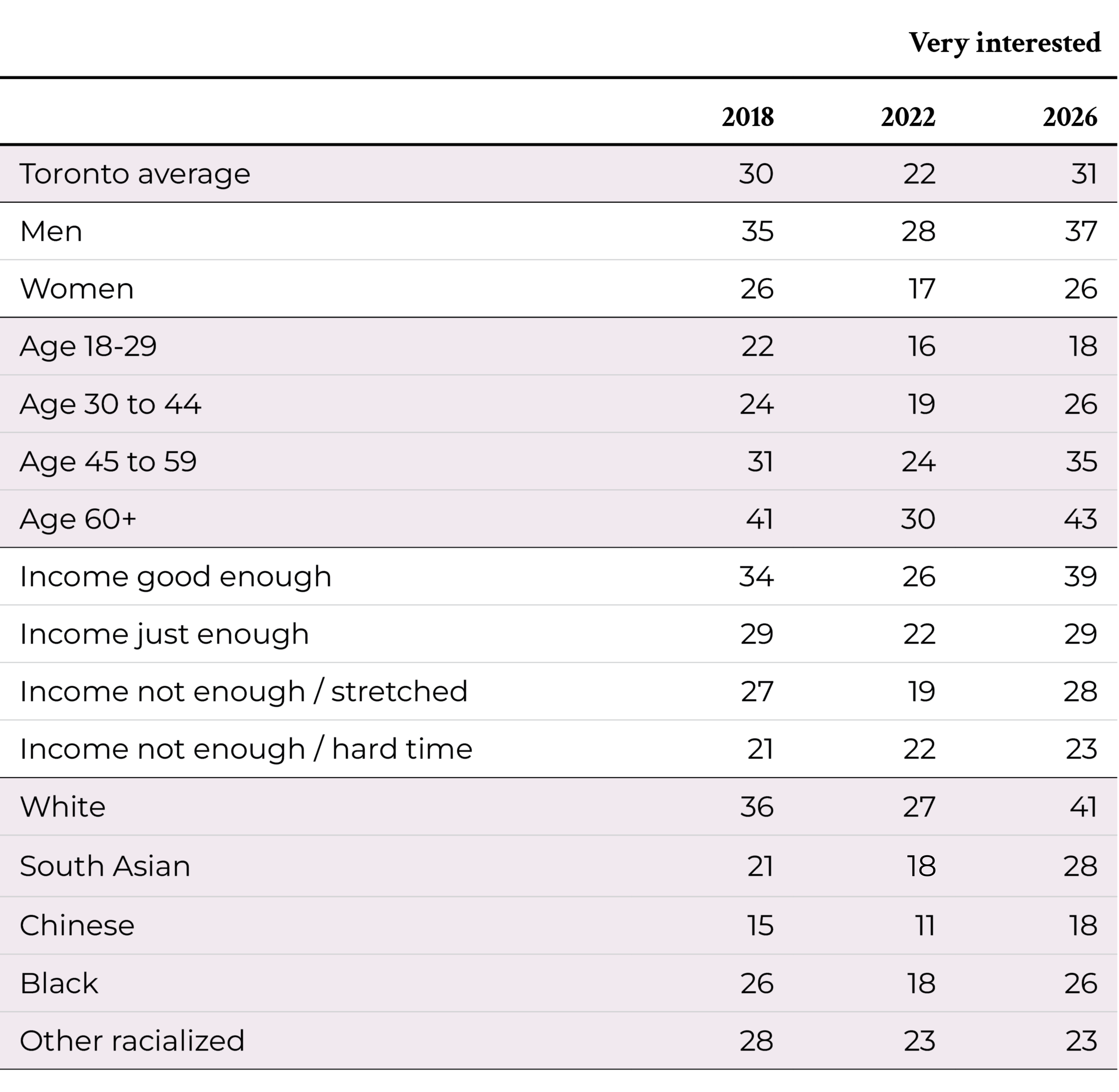
- Three in ten (31%) Torontonians are very interested in politics, and more than seven in ten (73%) are very or somewhat interested; conversely, 26% are not very or not at all interested.
- Interest in politics declined between 2018 and 2022, but has since rebounded. This pattern holds across all age groups.
- The proportion that is not very or not at all interested is higher among younger city residents (34% among those age 18 to 29) and among those facing income insecurity (38% among those whose incomes are not enough for them, such that they are having a hard time).
Social networks and social capital
One essential dimension of social capital is the extent to which people engage with others in groups and organizations, above and beyond their family and friendship networks. Civic engagement includes behaviours like donating and volunteering with charities and nonprofit organizations; engagement in political life; and participating in organizations and groups like sports and recreation, religious, cultural, seniors’ or youth groups or unions.
The civic engagement index
The survey results relating to civic engagement are combined to form a single index that provides the basis for identifying how this form of social capital varies across Toronto and how it has changed since 2018. The index is scored from “0” (lowest possible score) to “10” (highest possible score).


1 These figures are based upon membership in nine identified groups, as well as in other groups not identified. The identified groups are: A union or professional association; a political party or group; a sports or recreational organization; a cultural, educational or hobby organization; a religious-affiliated group (such as a church group or choir, but not a church, synagogue, mosque etc.); a service club (such as Rotary or the Legion); a seniors group; a youth organization; an immigrant or ethnic association or club; any other type of organization that has not been mentioned.
Numbers may not add to exactly 100% due to rounding.