
Home > Vital Signs 2026 >
Neighbourhoods in Toronto
Where Torontonians live matters, but income often matters more. Differences in connection, participation and wellbeing between higher- and lower-income residents are often greater than those across neighbourhoods. These patterns help us understand both what we share in common and where our experiences differ.
Toronto includes six former cities that were amalgamated at the end of the 1990s. Today, the City recognizes 158 neighbourhoods for planning and service delivery. But Torontonians don’t necessarily draw the same boundaries. Residents may identify with these official neighbourhoods or with communities shaped by history, culture and lived experience.
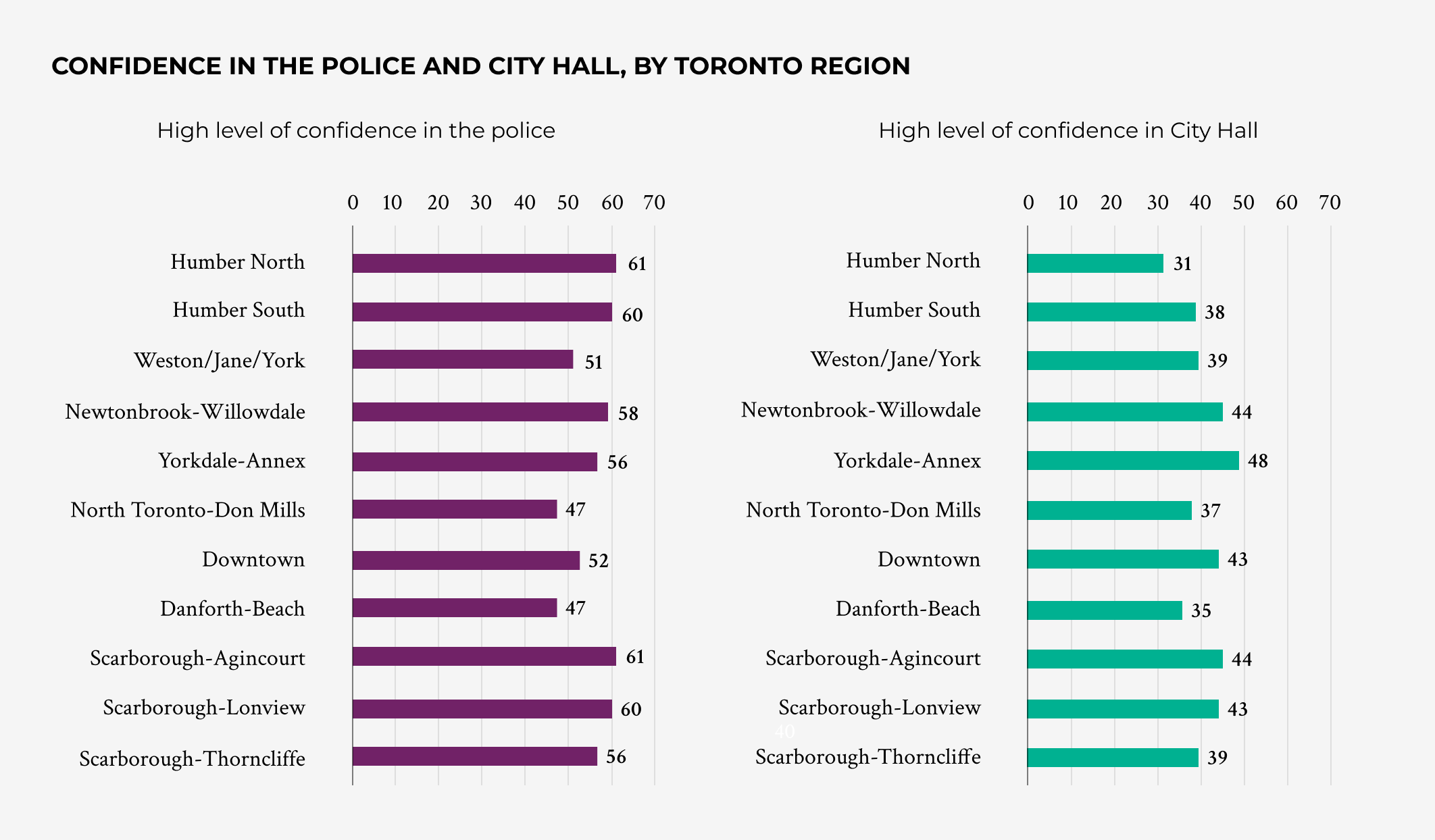
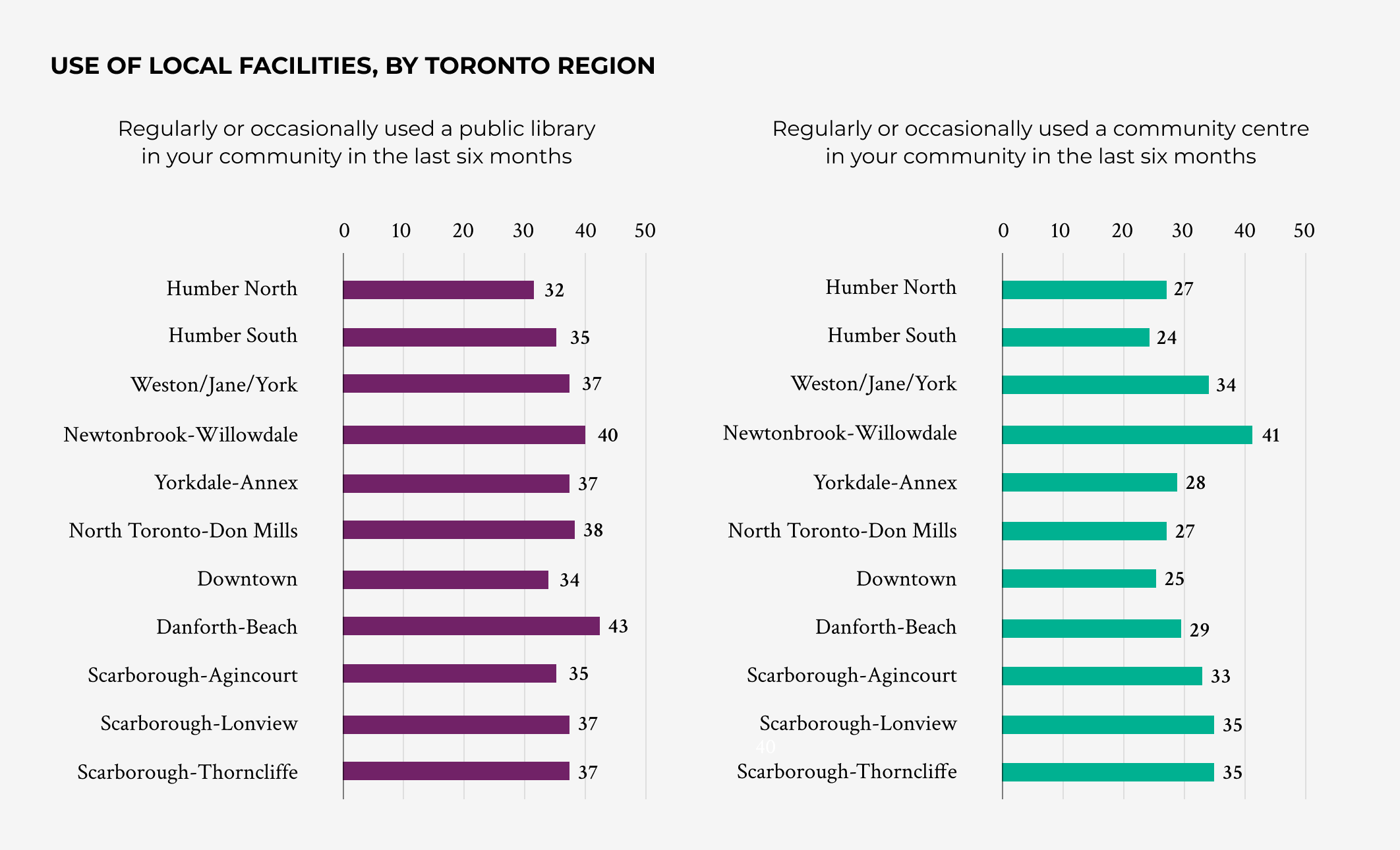
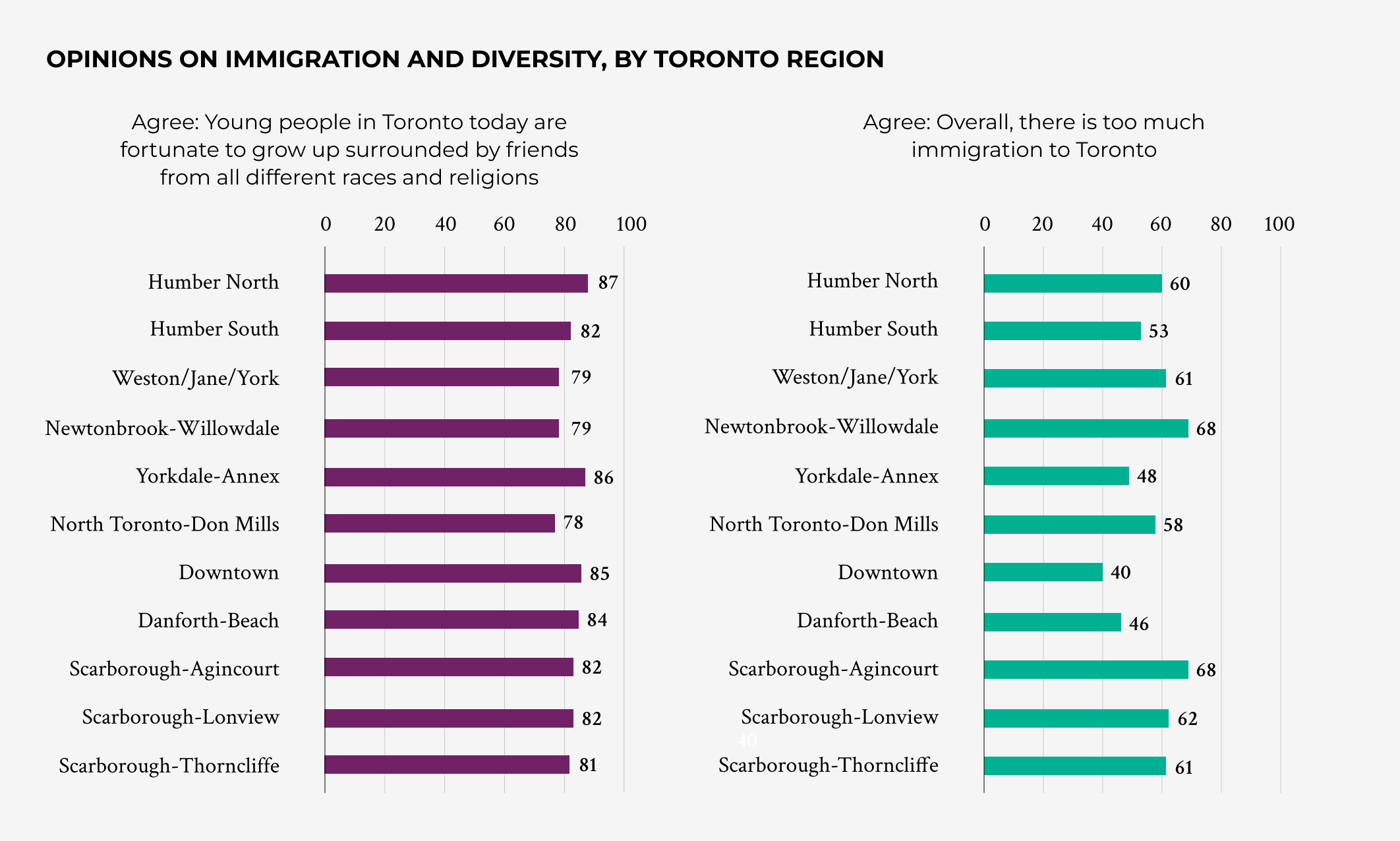
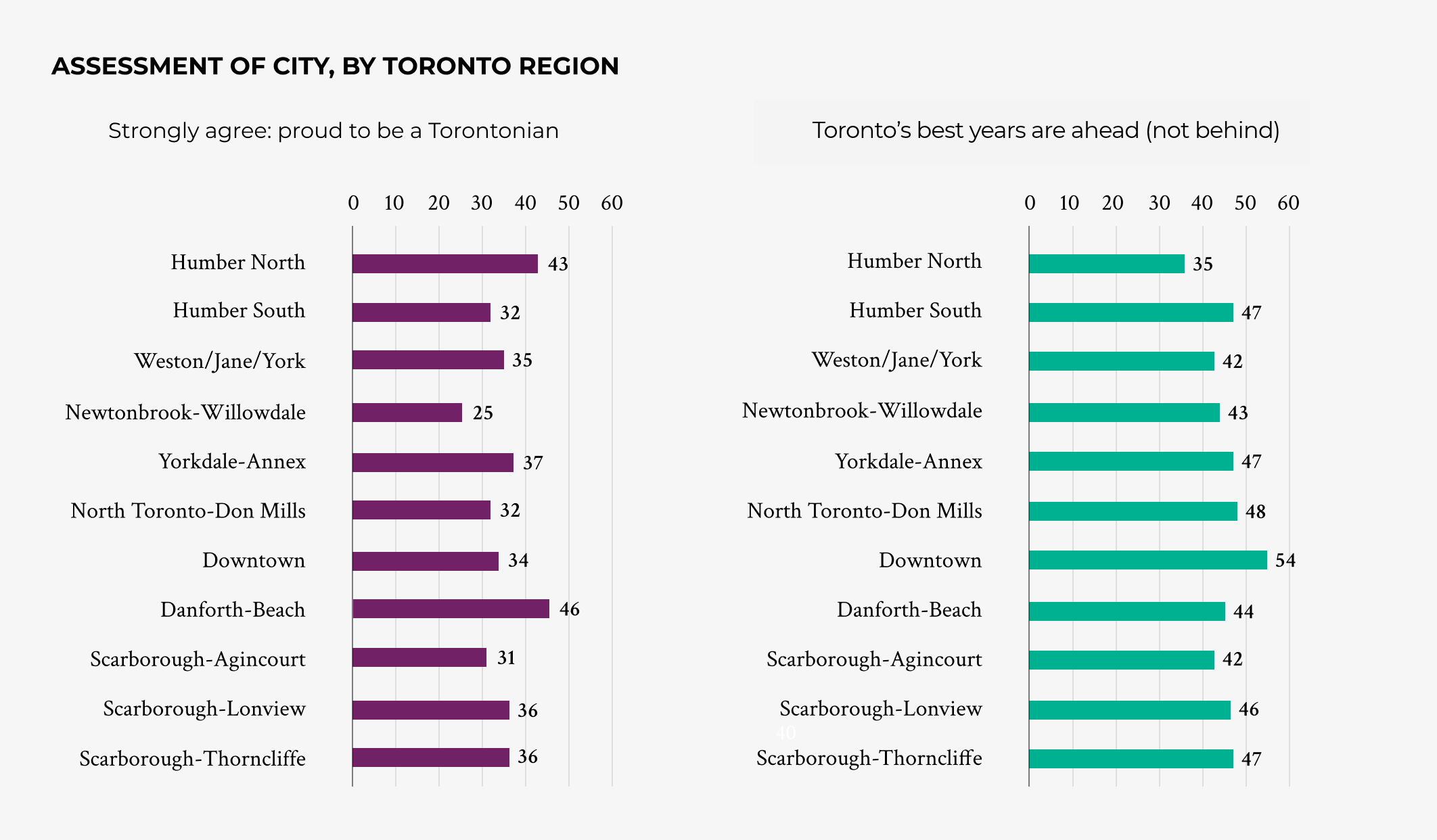
To explore how experiences vary across Toronto, we've grouped findings from the Toronto Social Capital Survey into 11 clusters, each combining a number of the 158 official neighbourhoods. These clusters give us enough survey respondents in each area to make meaningful comparisons (the subsample sizes range from 172 to 461).
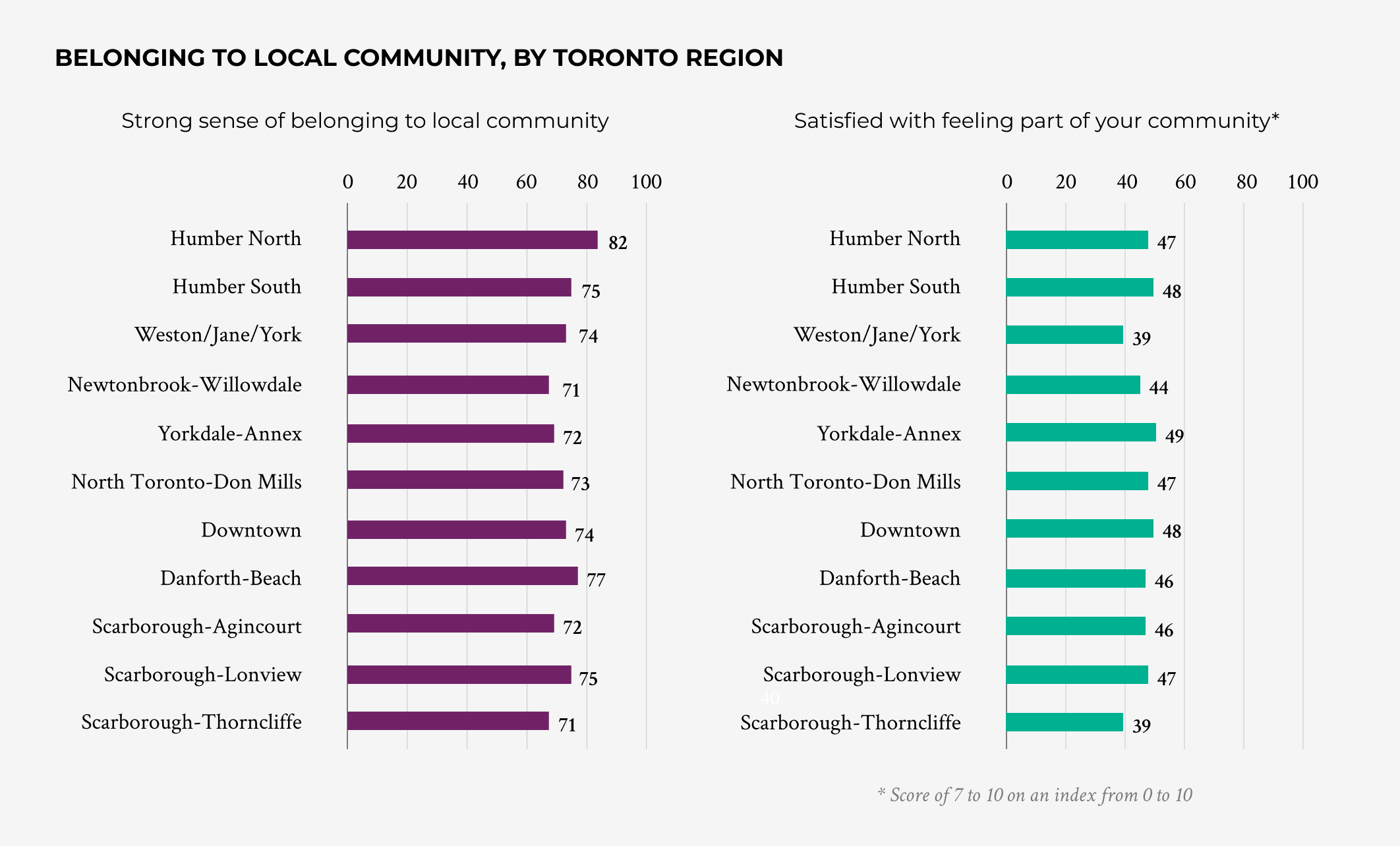
The charts that follow show how responses to selected survey questions vary across these 11 areas, offering another lens on the experiences of Torontonians in 2026.
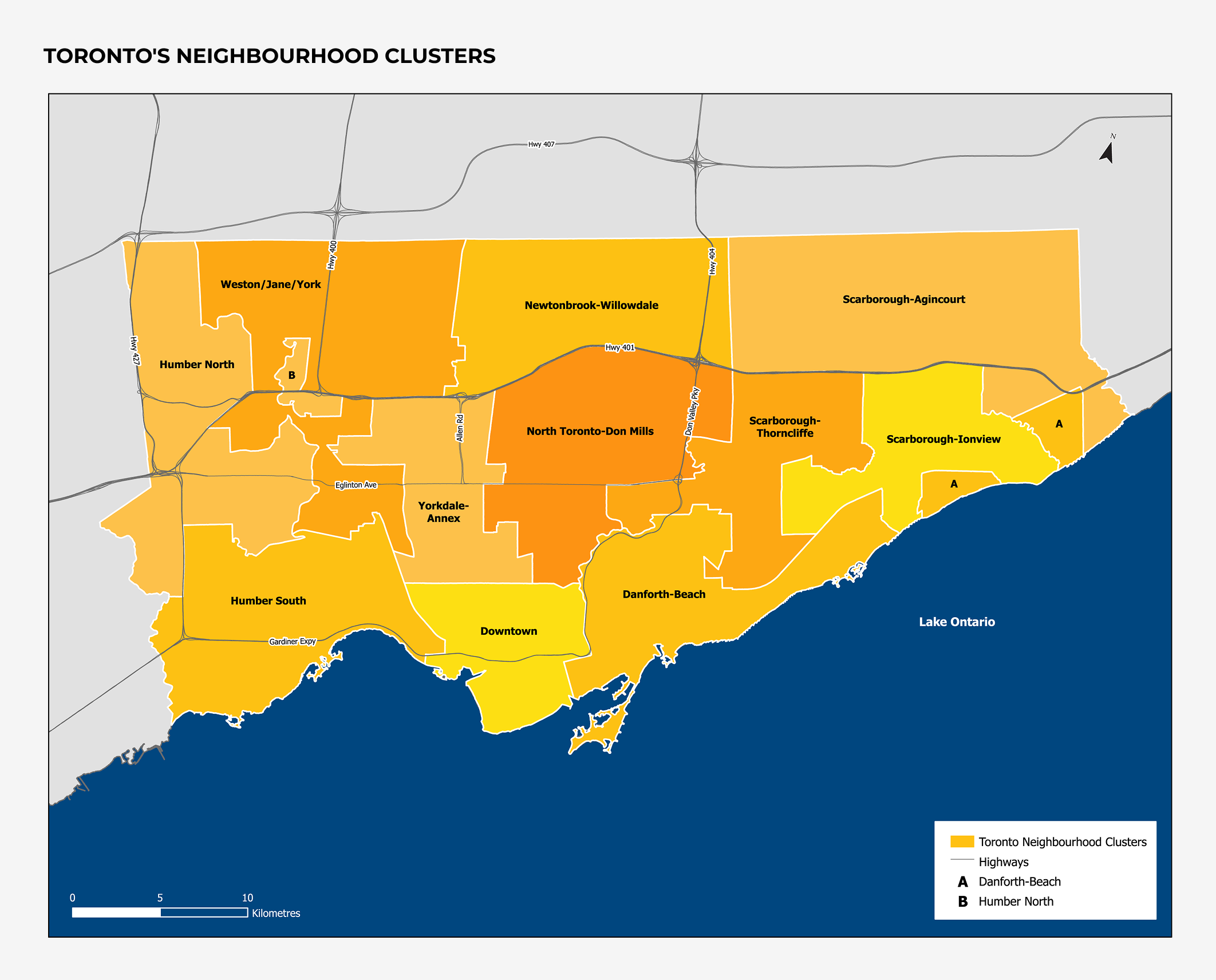
Map courtesy of Environics Analytics.
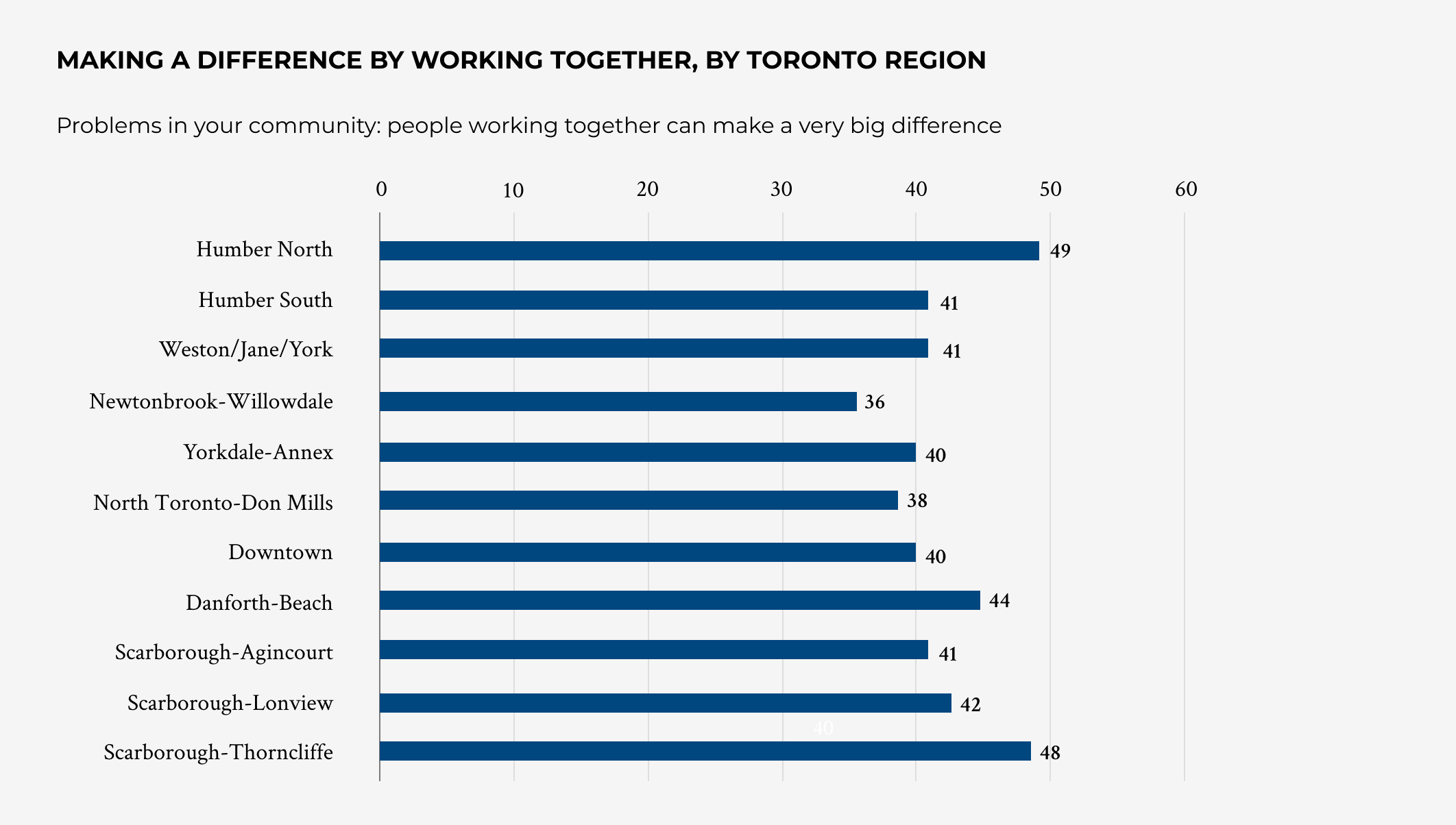
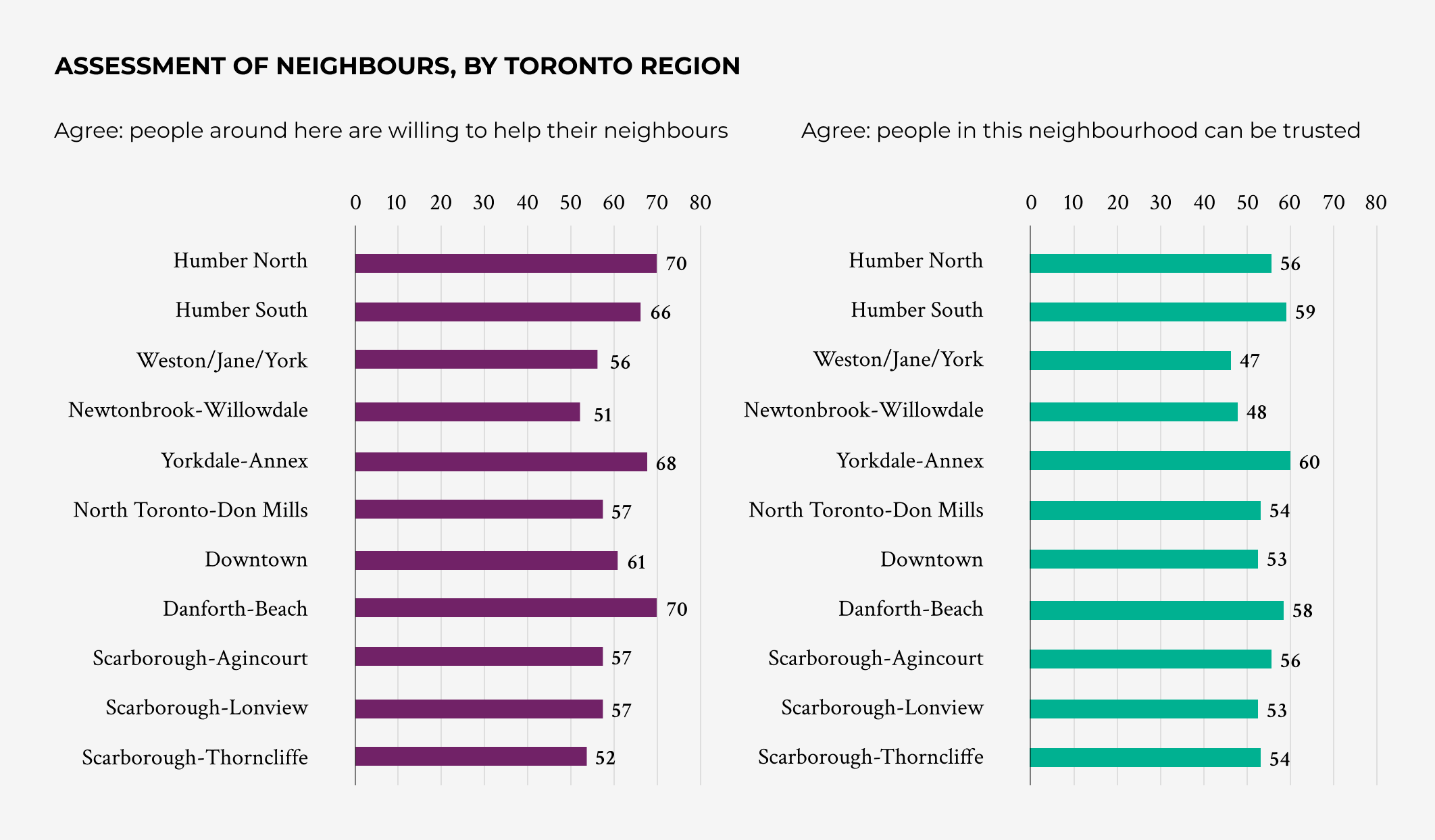
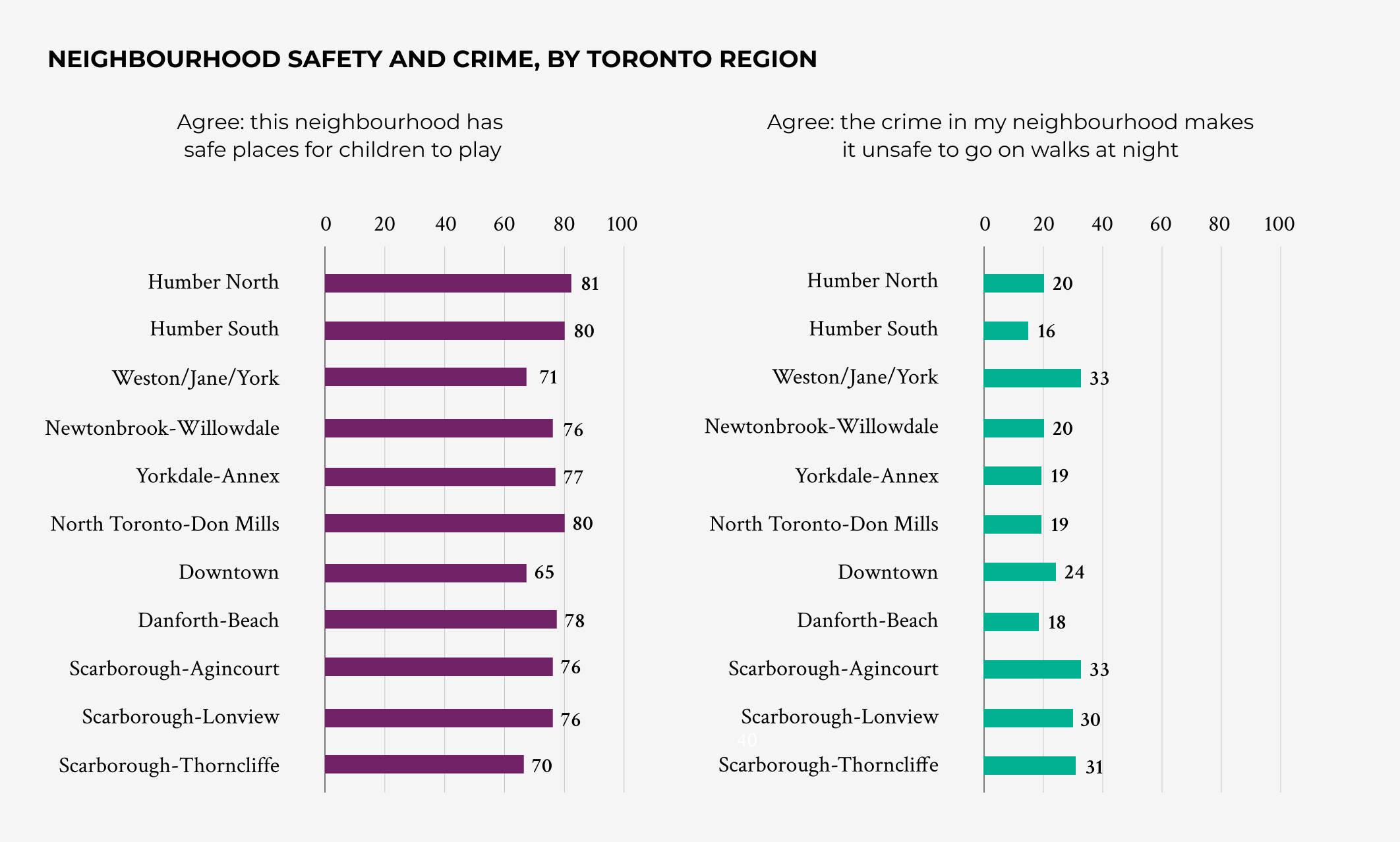
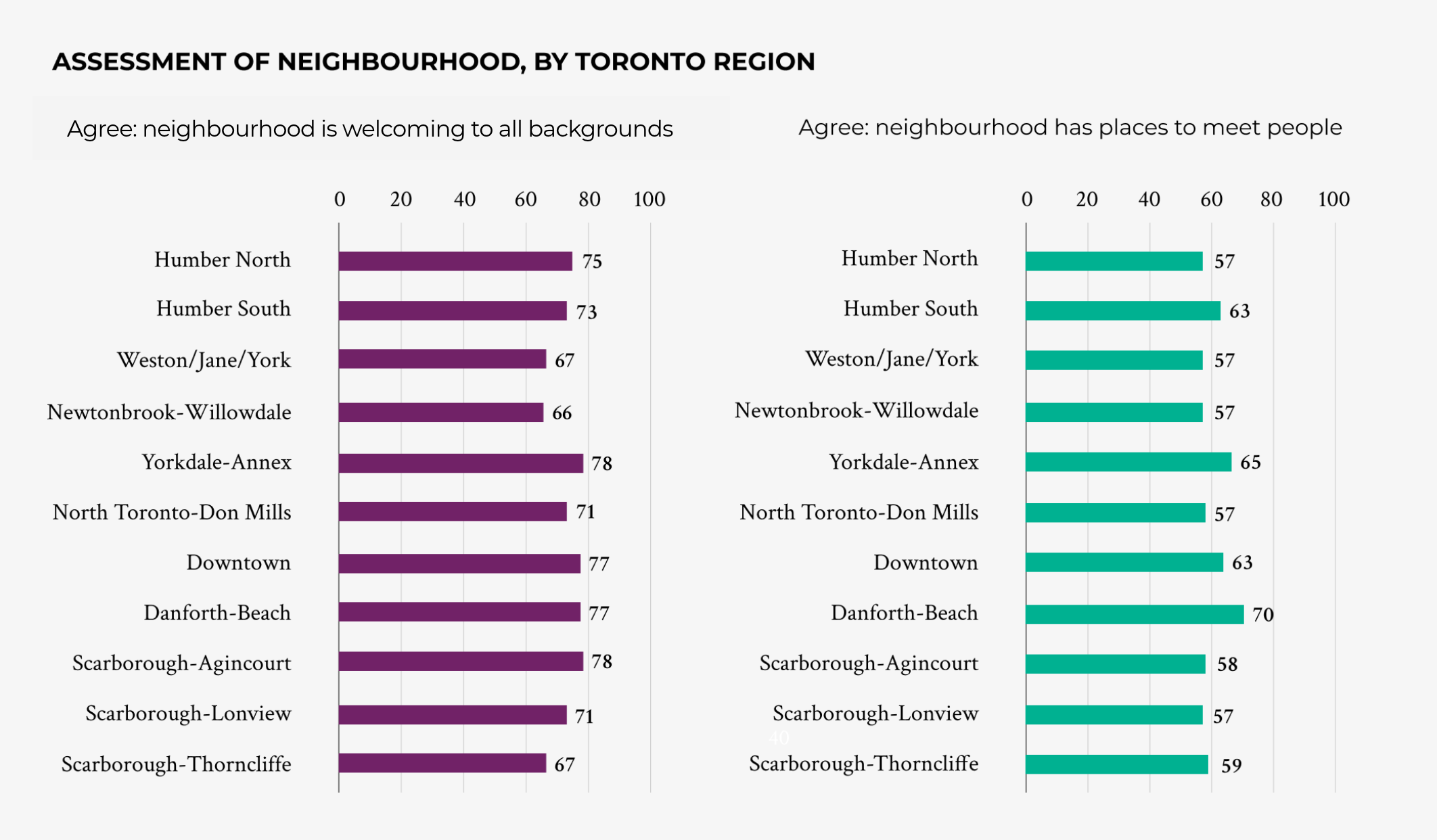
See more results in the complete survey data tables here.
Numbers may not add to exactly 100% due to rounding.