

Most Torontonians say that cooperation with their neighbours can help solve local problems; feel a responsibility to help others; believe that the people around them are willing to help their neighbours; and also typically feel they have people they can depend on for help should they need it. But such feelings of social solidarity and support are much less likely to be expressed by city residents facing income insecurity.
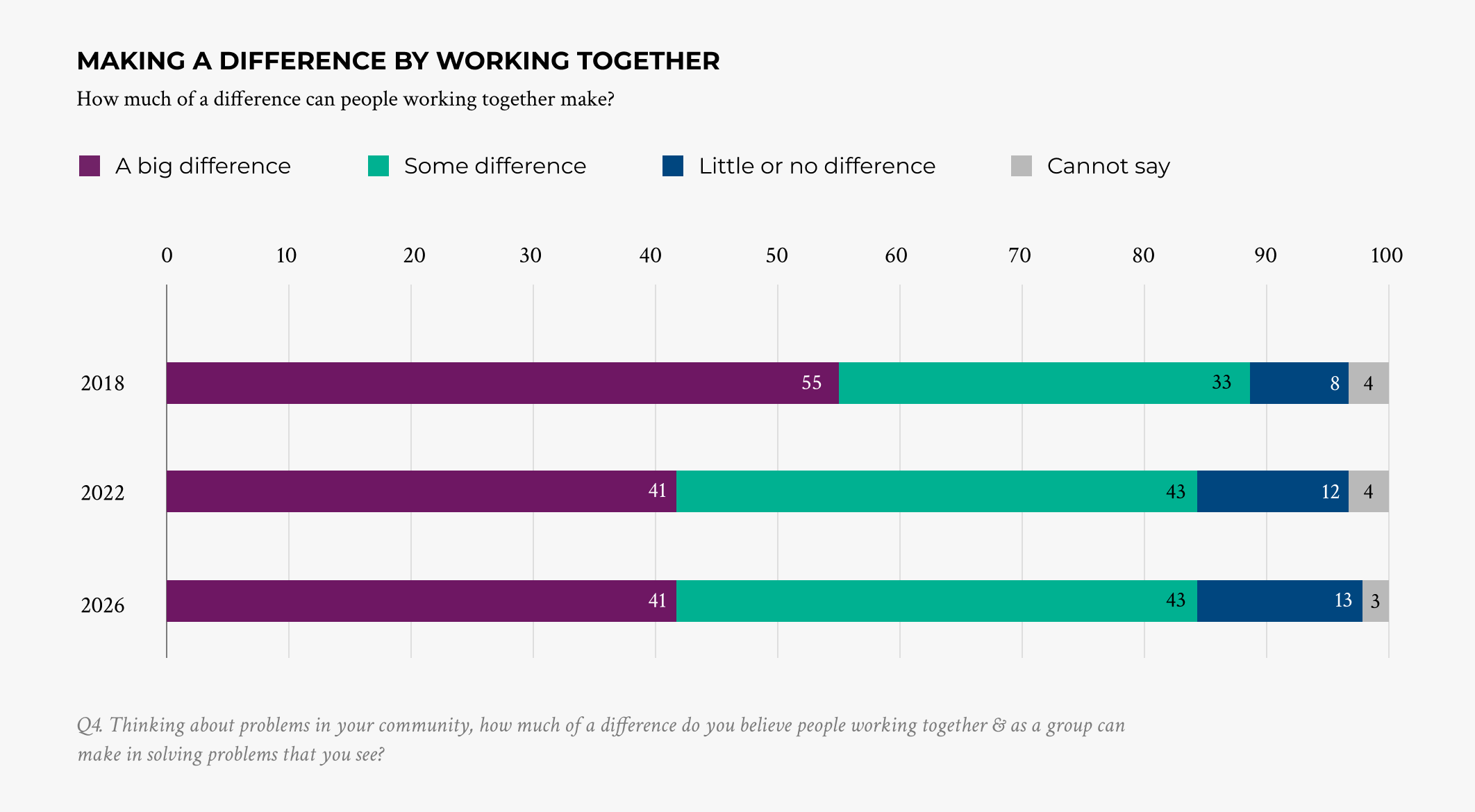
Most Torontonians agree that working together with other people can help solve problems in their community
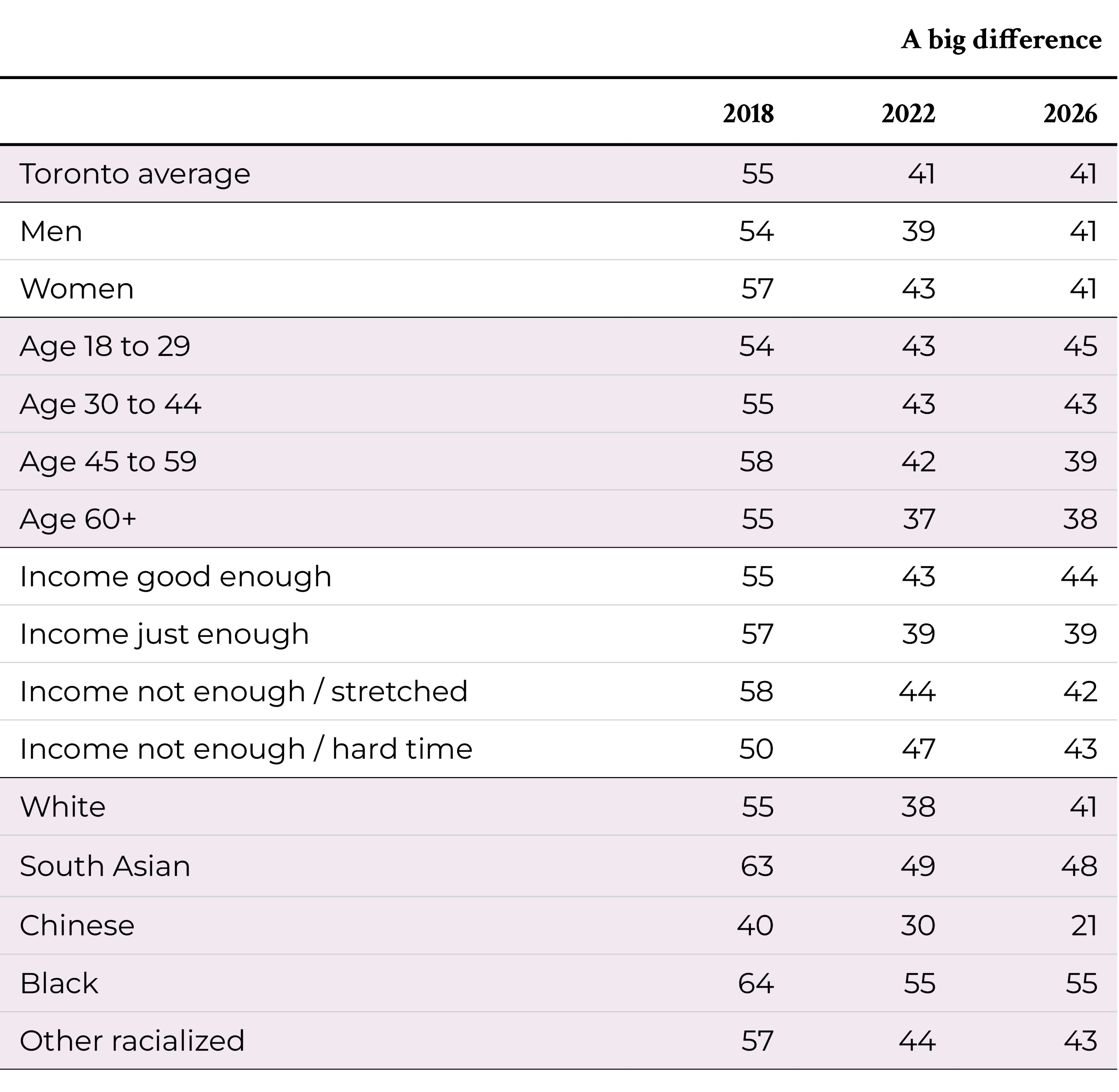
- Almost nine in ten Torontonians believe that people working together as a group can make at least some difference in solving problems that they see in their community.
- The proportion saying that this type of collaboration can make a big difference nonetheless declined by 14 percentage points (from 55% to 41%) between 2018 and 2022. It remains at 41% in 2026.
- Black Torontonians (55%) are among the most likely to believe that people working together as a group can make a big difference in solving problems that they see in their community. Chinese Torontonians (21%) are among the least likely to hold this view.
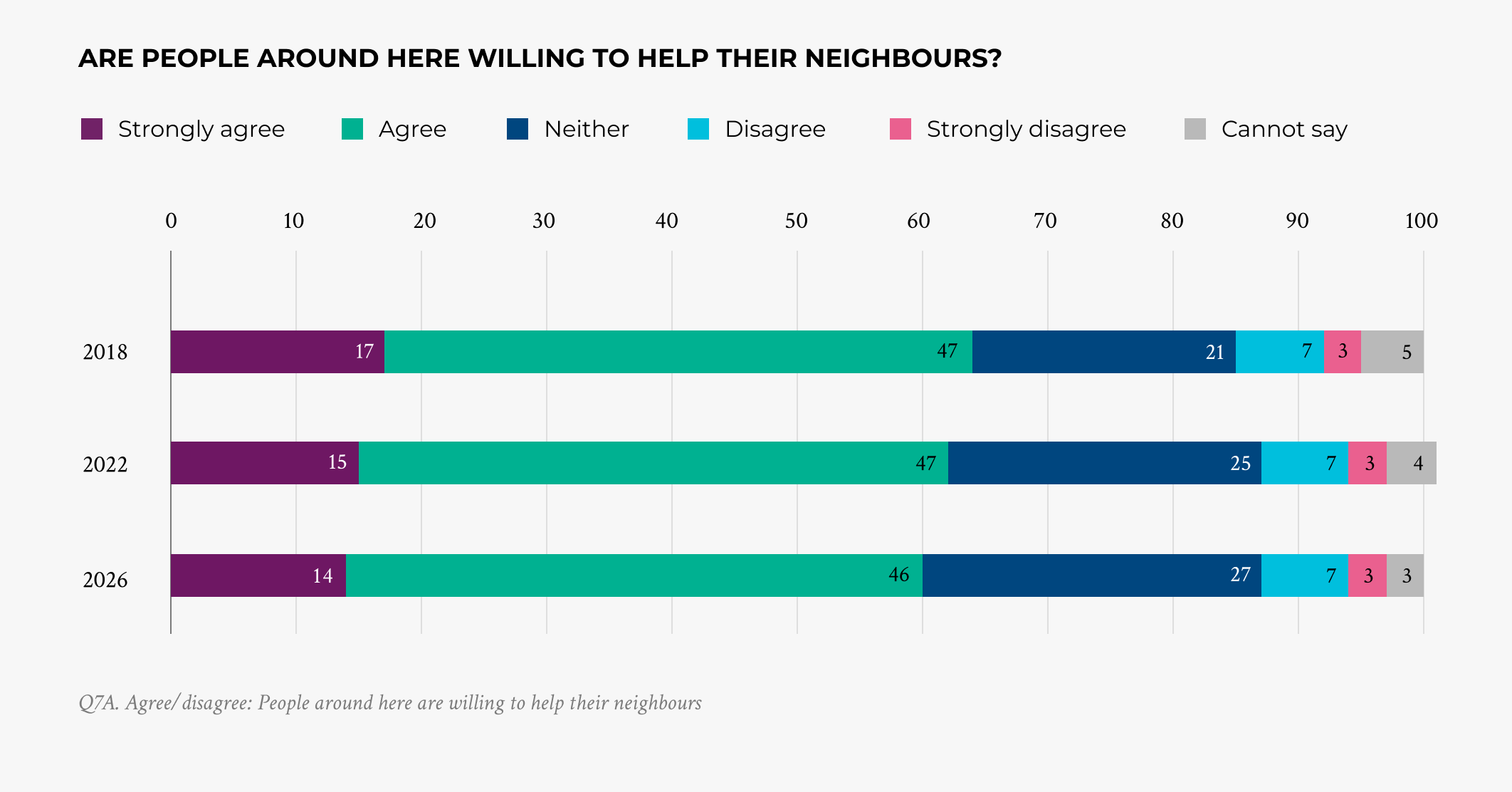
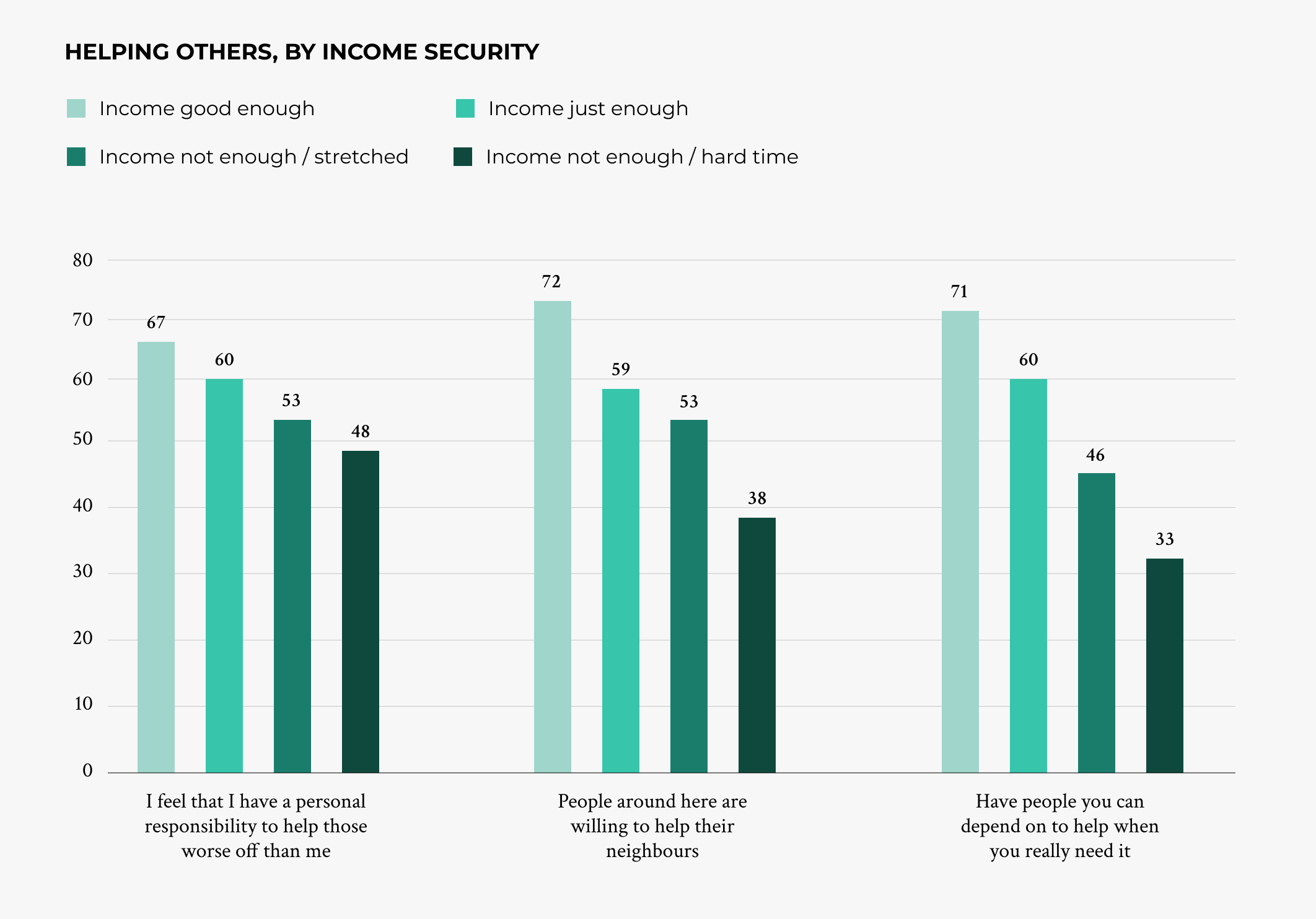
A majority of Torontonians feel they have a responsibility to help others and that others around them are willing to help their neighbours. But Torontonians facing income insecurity are much less likely to express these views.
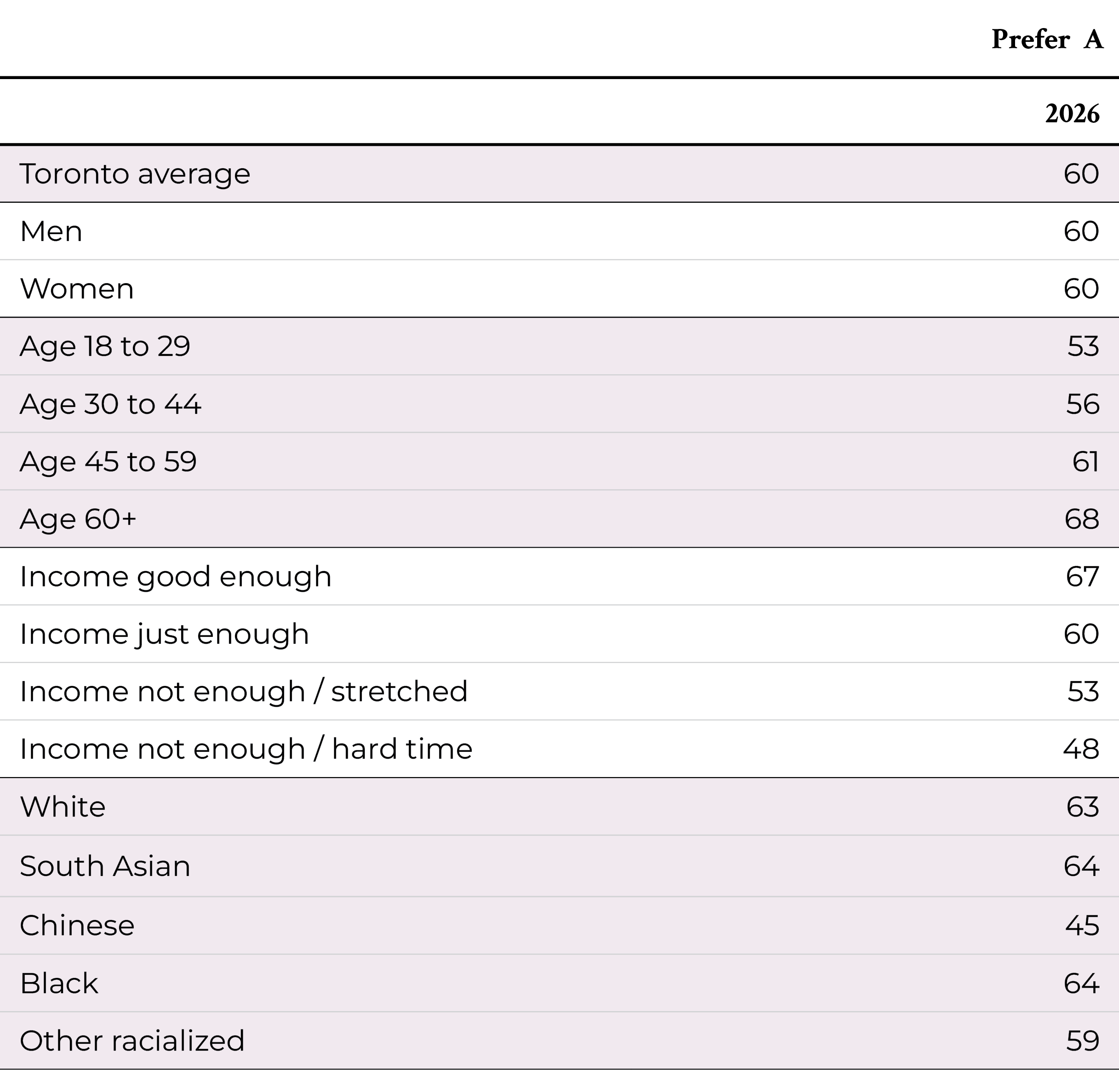
- Three in five Torontonians (60%) feel that they have a personal responsibility to help those worse off than them. The alternative view—that they have enough trouble taking care of themselves without worrying about the needs of those worse off than them—is held by 36% of Toronto residents.
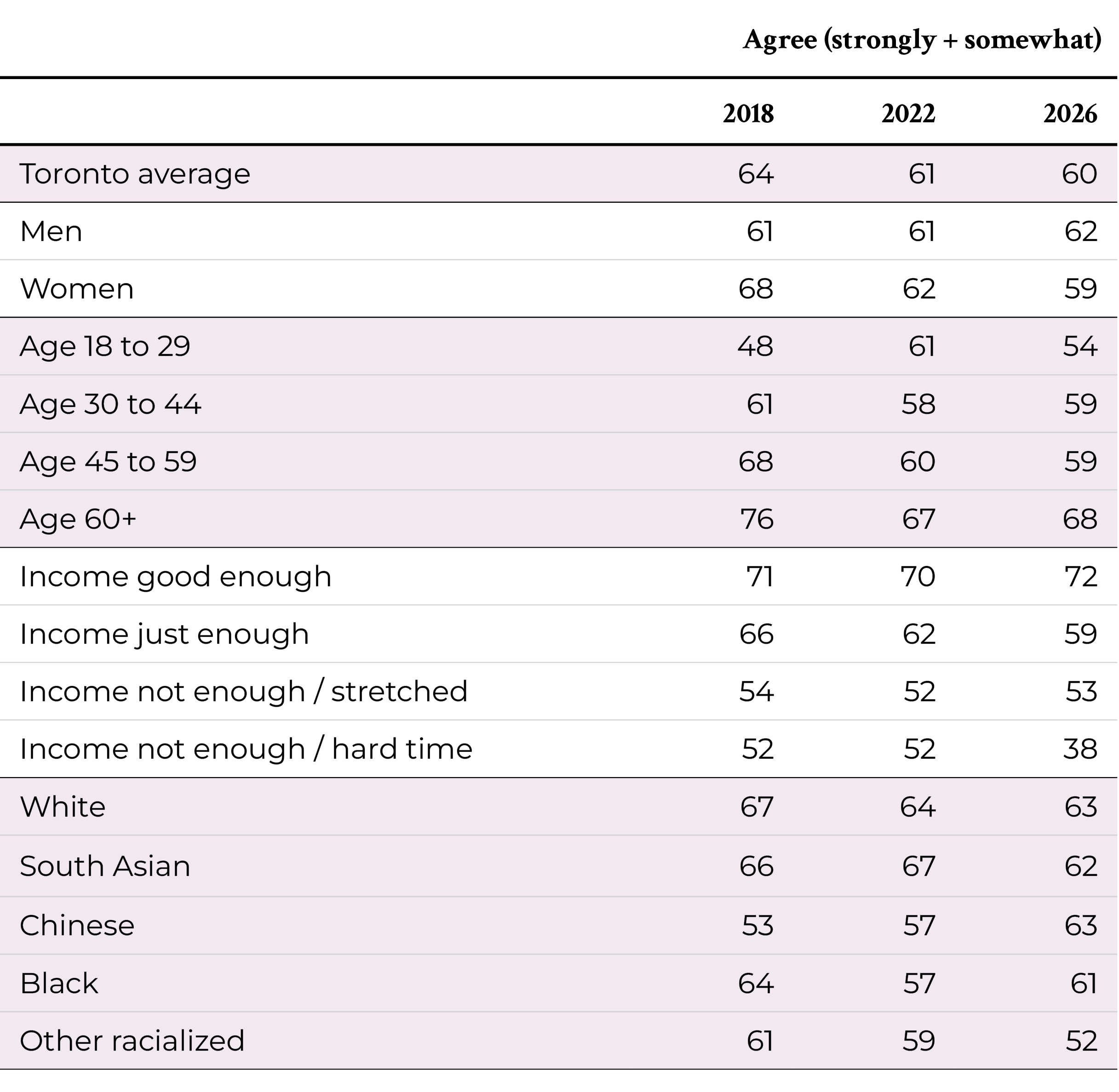
- The same proportion (60%) agrees that people who live in their neighbourhood are willing to help their neighbours. In this case, 27% neither agree nor disagree, and only 10% disagree.
- Views on these two questions are strongly related to income security. Torontonians who describe their household income as being good enough for them such that they can save from it are much more likely to feel they have a responsibility to help others, and that their neighbours are willing to help others, than are those who describe their income as not enough and that they are having a hard time.
- Among those who describe their income as not enough and that they are having a hard time, agreement that “people around here are willing to help their neighbours” fell by 14 points (from 52% to 38%) between 2022 and 2026.
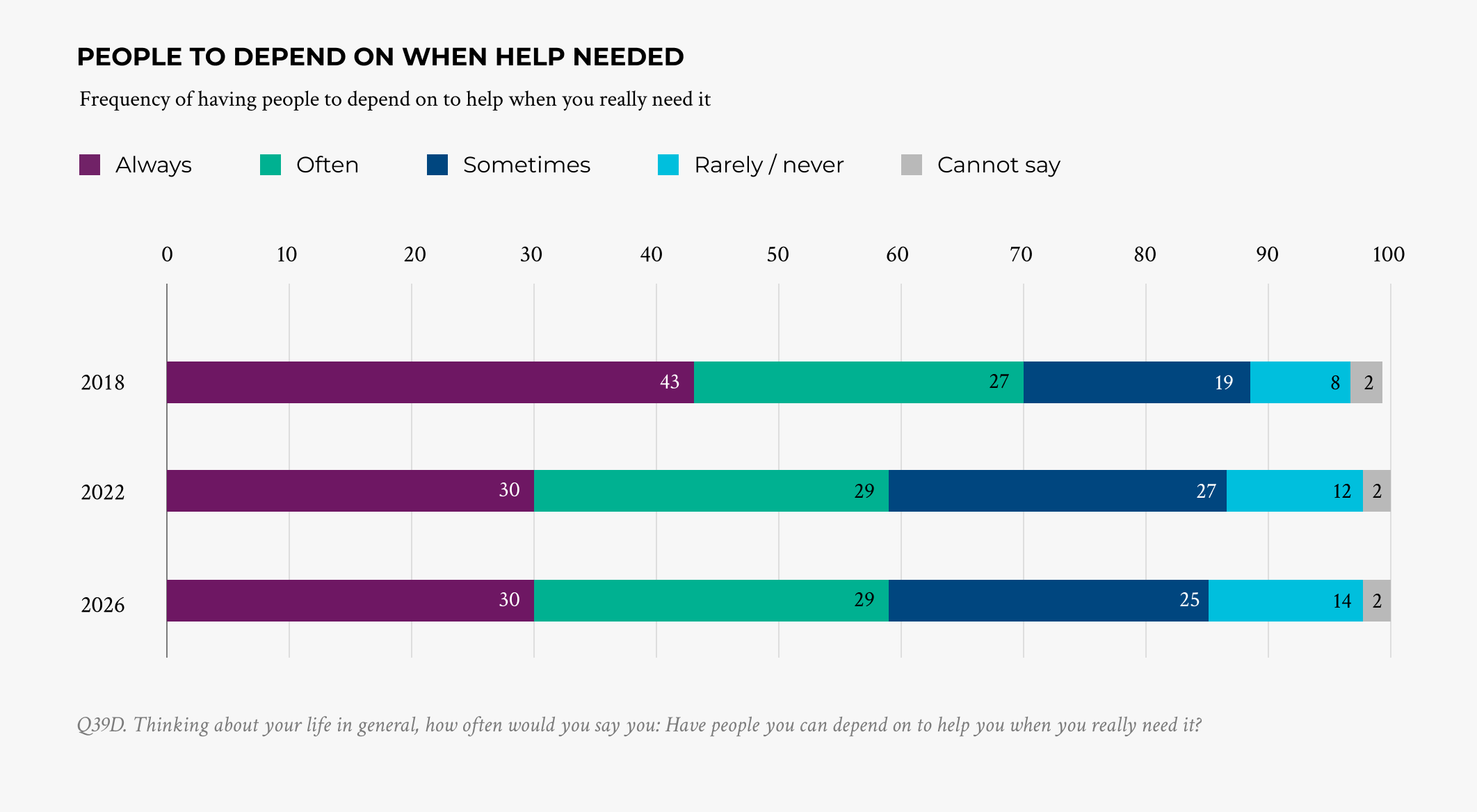
While most Torontonians say they always or often feel they have people they can depend on, the proportion holding this view has declined since 2018
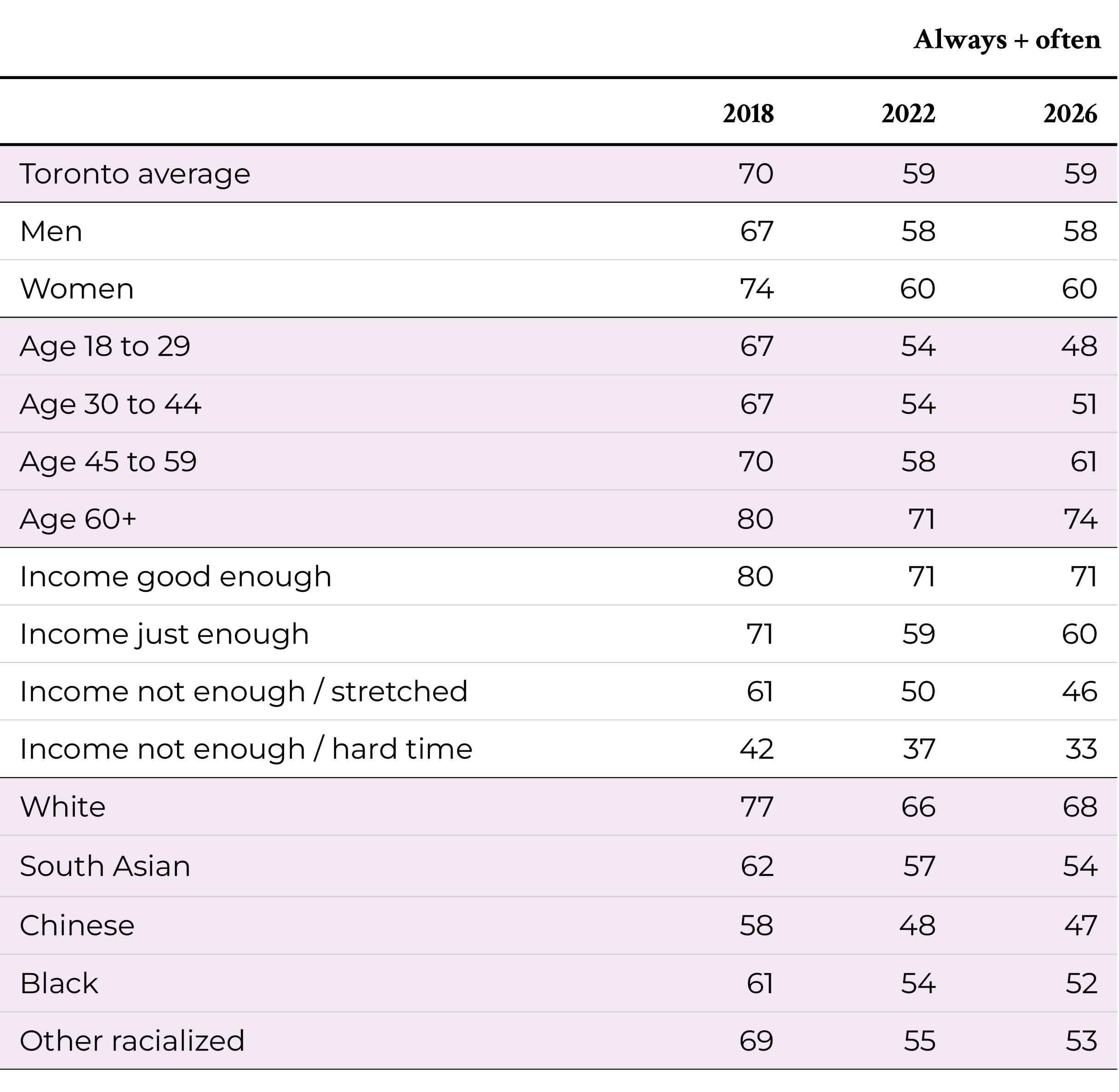
- Three in five Torontonians (59%) say they always or often feel they have people they can depend on to help them when they really need it. But this proportion was higher (70%) in 2018.
- Torontonians facing income insecurity are much less likely to feel that they always or often have people they can depend on to help them when they really need it.
- Among those who describe their income as not enough for you and that they are having a hard time, the sense that they have people they can depend on to help them fell by nine points (from 42% to 33%) between 2018 and 2026.
Data Tables
See more results in the complete survey data tables here.
Numbers may not add to exactly 100% due to rounding.